WHY WE DIE: Author Livestream and Q&A with Venki Ramakrishnan #SciFriBookClub
TL;DR
Nobel laureate Venki Ramakrishnan argues that while molecular biology has revealed specific mechanisms driving aging, extending maximum human lifespan remains uncertain and raises profound ethical concerns about inequality; the priority should be extending healthspan rather than pursuing radical longevity.
🔬 The Cellular Mechanics of Aging 3 insights
Multi-layered systemic breakdown
Aging occurs across multiple biological layers including DNA damage, protein misfolding, mitochondrial dysfunction, and accumulation of senescent cells that secrete inflammatory molecules, creating a vicious cycle of decline.
Evolutionary trade-offs drive senescence
Natural selection optimizes for reproductive fitness, not longevity; mechanisms like telomere shortening and cellular senescence evolved as anti-cancer protections early in life but actively cause aging and tissue degeneration later.
Stem cell exhaustion cripples regeneration
As stem cells decline in number and quality with age, the body's ability to regenerate tissues, replace muscle, and maintain immune function systematically fails, leading to organism-wide frailty.
⏱️ Lifespan Limits and Definitions 3 insights
Life expectancy doubled, maximum lifespan static
While life expectancy rose from 40 to 80+ years due to public health, vaccines, and antibiotics, maximum human lifespan remains fixed at approximately 110-120 years—a limit unchanged since the Renaissance.
The 150-year longevity bet
Ramakrishnan sides with demographer Jay Olshansky against biologist Steven Austad's claim that someone alive today will reach 150, arguing current science cannot slow intrinsic aging processes sufficiently within existing human lifetimes.
Death is systems failure, not cellular death
Human death represents the loss of coherence as an integrated individual rather than universal cellular death; paradoxically, most cells remain viable at death, which is why organ donation remains possible.
🌍 Societal and Economic Implications 3 insights
Longevity exacerbates inequality
In the UK, the wealthiest 10% live 10 years longer than the poorest (15 years in the US), with nearly double the healthy years; expensive longevity treatments risk widening these disparities into permanent biological castes.
Gerontocracy and generational stagnation
Radical life extension risks creating permanent gerontocracies where the same wealthy, powerful individuals control society indefinitely without generational turnover, potentially stifling innovation and social progress.
Healthspan expansion remains uncertain
Modern medicine has extended lifespan but increased the period of morbidity; while researchers hope to 'compress morbidity' into a short final decline, Ramakrishnan questions whether biology permits healthspan extension without simply postponing frailty.
Bottom Line
Focus scientific resources and healthcare policy on extending healthspan—disease-free, functional years—rather than maximal lifespan, as adding healthy years benefits society while avoiding the ethical dangers of radical life extension and generational inequality.
More from MIT Technology Review
View all
Looking for life in the clouds of Venus
MIT astrophysicist Dr. Sarah Seager discusses the scientific rationale for primitive life existing in Venus's sulfuric acid clouds, where temperatures are surprisingly habitable, and details the Morning Star Missions designed to detect complex organic molecules and eventually return samples to Earth.

Ask the Author with Daniel H. Wilson / Live Q&A 📱
Robotics PhD Daniel H. Wilson discusses his sci-fi thriller "Hole in the Sky," exploring humanity's confrontation with incomprehensible cosmic entities through military, scientific, and Cherokee worldviews, while reflecting on his pivot from engineer to author.
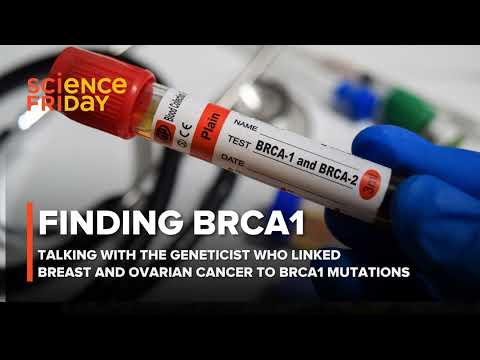
A trailblazing geneticist reflects on her life and work
Geneticist Mary-Claire King traces her journey from childhood math puzzles to groundbreaking discoveries, revealing how mentorship helped her persevere through PhD failures, how she proved humans and chimps share 99% of protein-coding DNA, and how the 1973 Chile coup redirected her toward cancer genetics.

The Evolution Of An Enzyme Engineer Who Changed Chemistry
Nobel laureate Dr. Francis Arnold revolutionized chemistry by developing directed evolution, a method to breed enzymes like livestock for specific industrial tasks from laundry detergents to pollution cleanup. She predicts that within 5-10 years, AI integration will enable scientists to 'vibe code' enzymes capable of performing virtually any chemical transformation on demand.