THE KISSING BUG - Author Livestream and Q&A with Daisy Hernández #SciFriBookClub
TL;DR
Author Daisy Hernández discusses her investigation into Chagas disease—a parasitic illness more prevalent in the U.S. than Zika yet virtually unknown to Americans—revealing how systemic "epidemiological divides" actively determine who receives care and who is left to suffer from treatable diseases based on wealth, geography, and immigration status.
🏥 The Great Epidemiological Divide 3 insights
Healthcare inequality is an active choice, not an accident
Hernández argues that terms like "disparities" and "poverty" obscure the reality that laws, funding decisions, and Medicaid restrictions deliberately consign certain populations to inferior care, creating a "great epi divide" between those who die of old age and those who die young from treatable illnesses.
The divide harms the insured, not just the uninsured
Research shows that women with health insurance receive fewer mammograms and prenatal services when living in largely uninsured communities, as low demand reduces accessibility; hospitals close and doctors relocate away from regions with high uninsured rates, degrading care for everyone.
The rise of the 'epi elite' concierge medicine
Wealthy families now pay $40,000 to $80,000 annually for concierge doctor services that allow them to "jump the line," creating a parallel healthcare system where the privileged receive immediate access to specialists while others fight for basic treatments like heart failure medication or insulin.
🐛 Chagas Disease in America 3 insights
A hidden epidemic more common than Zika
Chagas disease, transmitted by triatomine insects (kissing bugs) native to the southern and southwestern United States, affects more Americans than Zika virus yet remains virtually unknown to the public and medical establishment, leaving patients undiagnosed or dismissed.
Medical ignorance particularly harms immigrant women
Hernández recounts the case of a pregnant Virginia woman who requested Chagas screening common in her home country; her OB/GYN dismissed her concerns as anxiety despite Latin American immigrant populations increasing, highlighting dangerous gaps in prenatal protocols.
Environmental vectors span the southern United States
The nocturnal insects thrive in packrat nests, prairie dog burrows, and possum habitats throughout California, Arizona, Texas, and the Southwest; the Defense Department fumigates training grounds in Texas to protect military dogs, indicating environmental risk that extends to outdoor enthusiasts and pet owners.
✍️ Investigating Science and Family 3 insights
Bridging personal grief with scientific rigor
Hernández describes the ethical and emotional challenge of combining memoir with journalism after her aunt's death from Chagas, initially concealing her family connection to maintain objectivity but later disclosing it to build trust with patients and scientists accustomed to neglect.
The impossibility of eradication
Through research at insect colonies in Iowa and Colombia, she learned Chagas is a zoonotic disease carried by over 100 species of triatomine bugs, making eradication impossible; scientists explained that eliminating a few species simply allows others to "come off the bench" like baseball players.
Unsung heroes in county hospitals
The book highlights advocates like Dr. Sheba Mey at Olive View hospital in Los Angeles and healthcare workers in Harris County, Texas, who conduct community screenings and lobby state legislatures to expand Medicaid coverage for treatments like defibrillators, working against the epi divide at the local level.
Bottom Line
The epidemiological divide is not a natural law but a mutable boundary shaped by political choices; changing it requires electing officials who expand Medicaid, funding public health infrastructure in underserved regions, and demanding that medical education address neglected diseases affecting immigrant communities.
More from MIT Technology Review
View all
Looking for life in the clouds of Venus
MIT astrophysicist Dr. Sarah Seager discusses the scientific rationale for primitive life existing in Venus's sulfuric acid clouds, where temperatures are surprisingly habitable, and details the Morning Star Missions designed to detect complex organic molecules and eventually return samples to Earth.

Ask the Author with Daniel H. Wilson / Live Q&A 📱
Robotics PhD Daniel H. Wilson discusses his sci-fi thriller "Hole in the Sky," exploring humanity's confrontation with incomprehensible cosmic entities through military, scientific, and Cherokee worldviews, while reflecting on his pivot from engineer to author.
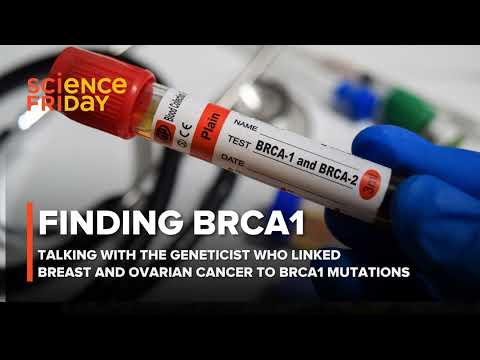
A trailblazing geneticist reflects on her life and work
Geneticist Mary-Claire King traces her journey from childhood math puzzles to groundbreaking discoveries, revealing how mentorship helped her persevere through PhD failures, how she proved humans and chimps share 99% of protein-coding DNA, and how the 1973 Chile coup redirected her toward cancer genetics.

The Evolution Of An Enzyme Engineer Who Changed Chemistry
Nobel laureate Dr. Francis Arnold revolutionized chemistry by developing directed evolution, a method to breed enzymes like livestock for specific industrial tasks from laundry detergents to pollution cleanup. She predicts that within 5-10 years, AI integration will enable scientists to 'vibe code' enzymes capable of performing virtually any chemical transformation on demand.