Big Mysteries: An Evening of Physics, Philosophy & Fun
TL;DR
Physicist Sean Carroll argues that engaging directly with mathematical equations—not just metaphors—is essential to grasp modern physics, from the relativistic nature of time and unresolved quantum paradoxes to the mysterious dark matter and energy that comprise 95% of the cosmos.
🧮 The Language of Physics 3 insights
Equations exceed human intuition
Einstein's field equations contained predictions for black holes and the Big Bang that Einstein himself resisted, demonstrating that mathematical formalism often reveals truths beyond what its creators initially envision.
Math as accessible poetry
Carroll presents equations as 'concrete art' that can be learned by general readers without professional training, arguing that true understanding requires moving beyond analogies to engage with the mathematical relationships directly.
Cumulative complexity
While modern physics (quantum field theory, general relativity) is objectively harder than Newtonian mechanics, mastering it offers profound intellectual satisfaction comparable to learning a musical instrument.
⏰ The Nature of Time 3 insights
Time is fundamentally multifaceted
Relativity distinguishes between 'personal time' measured by clocks (which varies with motion) and 'coordinate time' as a location label, concepts that Newton incorrectly treated as identical.
Entropy creates temporal direction
While fundamental physics equations work equally well forward and backward, the Second Law of Thermodynamics—entropy increase—generates the 'arrow of time' and the felt experience of past-to-future flow.
Quantum time differs from space
In quantum mechanics, a particle's location in space is an observable fact, but the precise time at which an event occurs is not, fundamentally separating time from space in ways classical physics never anticipated.
🐱 Quantum Reality Debates 3 insights
Schrödinger's cat as critique
Erwin Schrödinger devised the famous thought experiment to mock the Copenhagen interpretation's implication that macroscopic objects (cats) could exist in superposition (both alive and dead) until observed, not to illustrate quantum weirdness.
The measurement problem persists
Despite quantum mechanics' 100-year predictive success, physicists remain divided on what physically occurs before measurement—whether superposition represents a literal state of reality or merely reflects incomplete knowledge.
Einstein's incompleteness argument
Both Einstein and Schrödinger maintained that quantum mechanics functions as a statistical tool rather than a final description of nature, arguing that 'God does not play dice' and the theory must eventually be superseded.
🌌 The Dark Universe 3 insights
The 95% unknown
Dark matter and dark energy comprise 95% of the universe's energy content but remain invisible to telescopes because they lack electromagnetic interaction, requiring indirect detection methods and 'clever' experimental design.
Primordial black hole surprises
James Webb Space Telescope observations suggest giant black holes existed earlier in cosmic history than formation theories allow, potentially indicating new physics from the universe's first moments.
Expansion controversies clarified
Recent headlines suggesting the universe is 'shrinking' misinterpret data showing dark energy might be slowly weakening rather than constant; the universe continues expanding, though the 'Hubble tension' reveals a puzzling 5% discrepancy between independent measurement methods.
Bottom Line
To genuinely understand modern physics—from the relative flow of time to the composition of the cosmos—one must engage directly with mathematical equations rather than relying solely on analogies, as the equations contain predictive truths that consistently surprise even their discoverers.
More from MIT Technology Review
View all
Looking for life in the clouds of Venus
MIT astrophysicist Dr. Sarah Seager discusses the scientific rationale for primitive life existing in Venus's sulfuric acid clouds, where temperatures are surprisingly habitable, and details the Morning Star Missions designed to detect complex organic molecules and eventually return samples to Earth.

Ask the Author with Daniel H. Wilson / Live Q&A 📱
Robotics PhD Daniel H. Wilson discusses his sci-fi thriller "Hole in the Sky," exploring humanity's confrontation with incomprehensible cosmic entities through military, scientific, and Cherokee worldviews, while reflecting on his pivot from engineer to author.
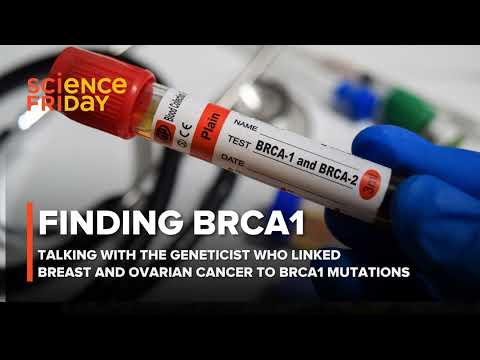
A trailblazing geneticist reflects on her life and work
Geneticist Mary-Claire King traces her journey from childhood math puzzles to groundbreaking discoveries, revealing how mentorship helped her persevere through PhD failures, how she proved humans and chimps share 99% of protein-coding DNA, and how the 1973 Chile coup redirected her toward cancer genetics.

The Evolution Of An Enzyme Engineer Who Changed Chemistry
Nobel laureate Dr. Francis Arnold revolutionized chemistry by developing directed evolution, a method to breed enzymes like livestock for specific industrial tasks from laundry detergents to pollution cleanup. She predicts that within 5-10 years, AI integration will enable scientists to 'vibe code' enzymes capable of performing virtually any chemical transformation on demand.