THE BIGGEST IDEAS IN THE UNIVERSE - Author Livestream and Q&A with Sean M. Carroll #scifribookclub
TL;DR
Physicist Sean Carroll discusses his book 'The Biggest Ideas in the Universe,' which bridges the gap between metaphor-heavy popular science and intimidating textbooks by teaching actual physics equations to readers with only high school algebra, proving that authentic mathematical understanding of concepts like general relativity is accessible without professional training.
📖 Bridging the Physics Accessibility Gap 3 insights
The missing middle ground in science education
Carroll identifies a wide gap between popular physics (which uses only metaphors and translations) and professional training (which requires years of calculus and differential equations), arguing that interested amateurs deserve access to the 'authentic essence' of modern physics without committing to a PhD.
Pandemic origin of the project
The book series began as nearly 50 YouTube videos created during COVID-19 lockdowns when Carroll purchased camera equipment the day before stores closed, teaching physics from his desk to provide educational content during quarantine.
Publisher compromise on scope
Originally conceived as either one massive 1,000-page book or a seven-book series, the project settled into a trilogy after negotiations with the publisher.
➗ Equations as Essential Language 3 insights
Rejecting the 'no equations' rule
Carroll challenges Stephen Hawking's famous dictum that 'every equation cuts your sales in half,' arguing that equations reveal deeper truths than metaphors alone, comparing reading physics without math to reading poetry in translation rather than the original language.
Democratizing Einstein's field equation
Carroll successfully teaches Einstein's general relativity equation in single one-hour lectures to audiences without calculus backgrounds, proving that sophisticated physics concepts can be grasped by motivated non-experts willing to look at mathematical notation.
High school algebra as the only prerequisite
The book requires no mathematical background beyond high school algebra, focusing on teaching readers how to interpret what equations mean conceptually rather than solving complex problems.
⚛️ Structure and Foundational Questions 3 insights
Three-book arc covering physics evolution
Volume 1 covers classical physics from Newton to Einstein; Volume 2 will address quantum mechanics and field theory; Volume 3 will explore complexity and emergence, with the series beginning with conservation laws as the fundamental shift from Aristotelian physics.
Natural philosophy as a discipline
Carroll holds the title 'Professor of Natural Philosophy' to reflect his work at the boundary between physics and philosophy, particularly regarding foundational questions about quantum mechanics, the arrow of time, and the many-worlds interpretation.
Quantum mechanics cannot be classical
Addressing whether quantum probabilities might stem from hidden classical variables, Carroll argues that quantum mechanics represents a fundamental departure from classical 'clockwork' determinism because wave functions can be negative or imaginary—properties impossible in classical probability theory.
Bottom Line
You don't need to become a professional physicist to understand the actual mathematical language describing the universe—high school algebra and willingness to engage with equations directly is sufficient to grasp everything from conservation laws to general relativity.
More from MIT Technology Review
View all
Looking for life in the clouds of Venus
MIT astrophysicist Dr. Sarah Seager discusses the scientific rationale for primitive life existing in Venus's sulfuric acid clouds, where temperatures are surprisingly habitable, and details the Morning Star Missions designed to detect complex organic molecules and eventually return samples to Earth.

Ask the Author with Daniel H. Wilson / Live Q&A 📱
Robotics PhD Daniel H. Wilson discusses his sci-fi thriller "Hole in the Sky," exploring humanity's confrontation with incomprehensible cosmic entities through military, scientific, and Cherokee worldviews, while reflecting on his pivot from engineer to author.
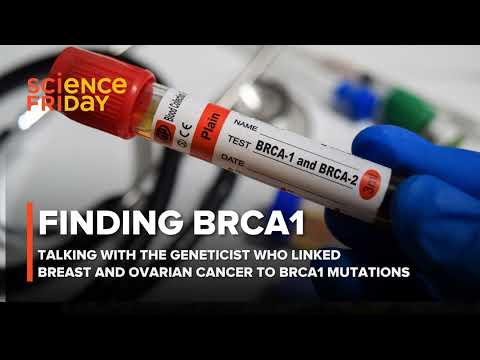
A trailblazing geneticist reflects on her life and work
Geneticist Mary-Claire King traces her journey from childhood math puzzles to groundbreaking discoveries, revealing how mentorship helped her persevere through PhD failures, how she proved humans and chimps share 99% of protein-coding DNA, and how the 1973 Chile coup redirected her toward cancer genetics.

The Evolution Of An Enzyme Engineer Who Changed Chemistry
Nobel laureate Dr. Francis Arnold revolutionized chemistry by developing directed evolution, a method to breed enzymes like livestock for specific industrial tasks from laundry detergents to pollution cleanup. She predicts that within 5-10 years, AI integration will enable scientists to 'vibe code' enzymes capable of performing virtually any chemical transformation on demand.