What was science like in America 250 years ago?
TL;DR
Colonial American science was driven by 'natural philosophers' like Benjamin Franklin and John Winthrop who combined artisan craftsmanship with rigorous data collection and international collaboration, establishing scientific inquiry as a foundational value enshrined in the Constitution.
⚡ Franklin and the Electrical Revolution 3 insights
Transforming electricity through documented protocols
Franklin established electricity as a legitimate science by recording detailed experimental protocols that allowed replication across Europe, moving the field beyond parlor tricks.
The kite experiment's scientific context
Although Franklin's 1752 kite experiment proved clouds contained electrical fluid, European scientists had already confirmed this using church steeples based on his earlier published protocols.
Artisan-driven innovation
Franklin's Philadelphia circle comprised printers, glassmakers, and watchmakers who combined manual craftsmanship with scientific inquiry, coining terms like 'electrician' and 'Leyden jar.'
🔭 Harvard and Celestial Observation 3 insights
Winthrop's earthquake data analysis
Harvard Professor John Winthrop analyzed the 1755 Boston earthquake by measuring brick fall distances to theorize seismic wave motion, countering Reverend Prince's claim that lightning rods caused the disaster.
International transit of Venus expeditions
Winthrop led a 1761 expedition to Newfoundland with a 24-foot telescope to observe Venus transiting the sun, contributing to global calculations of the solar system's scale.
Rittenhouse's emotional observation
Clockmaker David Rittenhouse fainted from overwhelming emotion while observing the 1769 Transit of Venus from Independence Hall, illustrating the profound personal investment in early American scientific discovery.
📜 Science and National Foundation 3 insights
Constitutional mandate for scientific progress
The Founding Fathers considered science so vital to democracy that Article 1 of the Constitution specifically called for the support and promotion of scientific inquiry.
Jefferson's open-source innovation
Thomas Jefferson invented practical devices like the polygraph copying machine but refused patents, believing innovations should be freely available for public use.
Scientific reputation enabling diplomacy
Franklin's European celebrity as a natural philosopher proved crucial for securing French support during the Revolution, as his scientific fame preceded his diplomatic mission.
Bottom Line
Early American science thrived through the meticulous data collection and hands-on experimentation of artisan-natural philosophers, establishing a legacy of practical innovation and international collaboration that became embedded in the nation's founding principles.
More from MIT Technology Review
View all
Even Nobel Prize winners deal with imposter syndrome
Nobel laureate Ardem Patapoutian shares his journey from Lebanese civil war refugee to pioneering neuroscientist, revealing how imposter syndrome persisted even at the peak of his career and why curiosity-driven research requires both ambitious dreaming and practical execution.

Looking for life in the clouds of Venus
MIT astrophysicist Dr. Sarah Seager discusses the scientific rationale for primitive life existing in Venus's sulfuric acid clouds, where temperatures are surprisingly habitable, and details the Morning Star Missions designed to detect complex organic molecules and eventually return samples to Earth.

Ask the Author with Daniel H. Wilson / Live Q&A 📱
Robotics PhD Daniel H. Wilson discusses his sci-fi thriller "Hole in the Sky," exploring humanity's confrontation with incomprehensible cosmic entities through military, scientific, and Cherokee worldviews, while reflecting on his pivot from engineer to author.
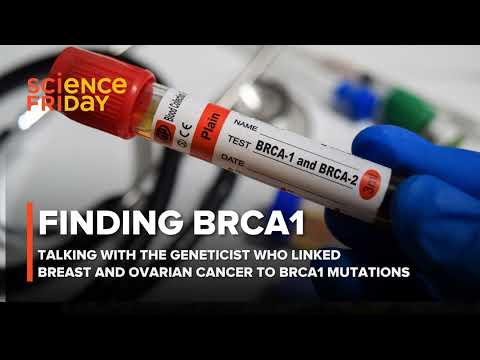
A trailblazing geneticist reflects on her life and work
Geneticist Mary-Claire King traces her journey from childhood math puzzles to groundbreaking discoveries, revealing how mentorship helped her persevere through PhD failures, how she proved humans and chimps share 99% of protein-coding DNA, and how the 1973 Chile coup redirected her toward cancer genetics.