A trailblazing geneticist reflects on her life and work
TL;DR
Geneticist Mary-Claire King traces her journey from childhood math puzzles to groundbreaking discoveries, revealing how mentorship helped her persevere through PhD failures, how she proved humans and chimps share 99% of protein-coding DNA, and how the 1973 Chile coup redirected her toward cancer genetics.
⚾ Foundations of Scientific Thinking 2 insights
Childhood baseball problems built logical intuition
At age six, King's disabled father taught her scientific thinking by creating story problems about Chicago Cubs batting averages, demonstrating that complex phenomena can be solved by identifying what information is missing.
Genetics as the ultimate puzzle
King describes genetics as the soul of puzzle-solving because it combines hypothesis formulation with quantitative experimental testing, appealing to both logical and mathematical thinking.
🎓 Navigating Scientific Adversity 2 insights
Mentor's advice prevented departure from science
When King considered quitting her Berkeley PhD due to failed experiments and political activism in the 1960s, Allan Wilson convinced her to stay by noting that if everyone whose experiments failed left science, no one would remain, and that only by completing training could she control her own research agenda.
Persistence enables agenda control
King emphasizes that sticking through discouragement is essential to reach a position where you decide what projects are pursued rather than always working for someone else's priorities.
🧬 Revolutionary Evolutionary Discoveries 2 insights
Humans and chimps share 99% protein-coding DNA
King's PhD research revealed that human and chimpanzee proteins were electrophoretically identical, leading to the hypothesis that anatomical differences stem from regulatory changes in gene expression timing rather than protein sequence variations.
Molecular vs. fossil evidence conflict
Despite blowback from paleontologists who believed humans and chimps diverged 15 million years ago based on fossils, King and Wilson defended their molecular evidence showing a 5-7 million year divergence, establishing that fossils and molecules tell parallel but equally legitimate evolutionary stories.
🔄 Pivot to Cancer Genetics 2 insights
Chile coup redirected career path
The 1973 military overthrow in Chile forced King to return to the US earlier than planned, leading her to UCSF where pediatric oncologist Nicholas Petrakis helped her transition from evolutionary biology to cancer research despite her lack of oncology background.
Genetics as universal application
Working with Petrakis revealed that genetic thinking could address complex diseases like breast cancer, which showed clear familial clustering patterns even though the viral oncogene theory prevalent at the time did not explain its hereditary nature.
Bottom Line
Complete your training and remain loyal to rigorous evidence—persistence through experimental failure and conviction in your data are prerequisites for controlling your research agenda and making discoveries that contradict established orthodoxy.
More from MIT Technology Review
View all
How does the gut-brain connection work?
Neurogastroenterologists Dr. Emran Mayer and Dr. Trisha Pesria explain that the gut operates as an autonomous 'second brain' containing 500 million neurons, communicating bidirectionally with the head brain primarily via the vagus nerve—where 80% of signals travel upward—suggesting that neurological diseases like Parkinson's may originate in the gut decades before brain symptoms appear.
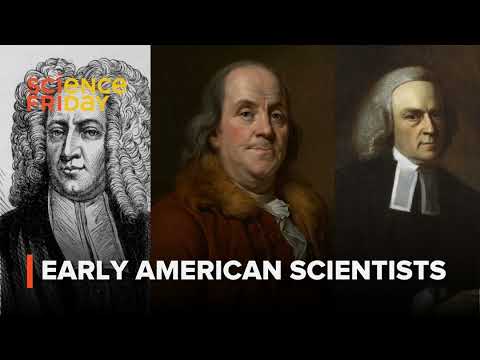
What was science like in America 250 years ago?
Colonial America's scientific culture was defined by "natural philosophers"—practical tinkerers like Franklin, Winthrop, and Jefferson who emphasized empirical observation, rigorous documentation, and replicable experiments. Their work established scientific inquiry as a foundational pillar of the new democracy, with international collaboration enabling breakthroughs from electricity to astronomy despite wartime hostilities.

What was science like in America 250 years ago?
Colonial American science was driven by 'natural philosophers' like Benjamin Franklin and John Winthrop who combined artisan craftsmanship with rigorous data collection and international collaboration, establishing scientific inquiry as a foundational value enshrined in the Constitution.

Even Nobel Prize winners deal with imposter syndrome
Nobel laureate Ardem Patapoutian shares his journey from Lebanese civil war refugee to pioneering neuroscientist, revealing how imposter syndrome persisted even at the peak of his career and why curiosity-driven research requires both ambitious dreaming and practical execution.