Even Nobel Prize winners deal with imposter syndrome
TL;DR
Nobel laureate Ardem Patapoutian shares his journey from Lebanese civil war refugee to pioneering neuroscientist, revealing how imposter syndrome persisted even at the peak of his career and why curiosity-driven research requires both ambitious dreaming and practical execution.
🧠 Scientific Identity & Imposter Syndrome 3 insights
Imposter syndrome lasted decades
Even as an assistant professor, Patapoutian avoided calling himself a "scientist," preferring "researcher" due to his immigrant background and unconventional path into academia.
No childhood destiny narrative
He rejects the idea that scientific greatness is predetermined, emphasizing instead a convoluted journey filled with luck and unpredictable opportunities.
The addictive 'aha moment'
He describes the primary motivation for research as the fleeting feeling of being the only person in the world who knows a specific fact.
🛤️ From Refugee to Researcher 3 insights
Fleeing war for unknown future
Patapoutian left Lebanon at 18 after being detained by militia during the civil war, arriving in the US alone with minimal money and no career plan.
Survival jobs to residency
He worked at Subway and a shoe store to establish California residency for affordable tuition, nearly returning to Lebanon out of discouragement.
Accidental calling
He entered a UCLA lab solely to secure a medical school recommendation letter, but discovered that investigating unanswered questions was more compelling than pre-med coursework.
🔬 Decoding Touch & Research Philosophy 3 insights
High-risk pivot to mystery
He switched from developmental biology to study how physical pressure converts to electrical signals—a field where virtually nothing was known at the molecular level.
Dreamer-practical balance
He argues that great scientists must combine ambitious "dreamer" thinking with pragmatic constraints, attacking questions solvable within 5-10 years using available tools.
Nobel-winning breakthrough
Through systematic gene elimination, he identified a new class of membrane sensors that translate mechanical pressure into neural signals, revolutionizing sensory biology.
🌍 Immigration Policy & Scientific Brain Drain 3 insights
Modern barriers to entry
Patapoutian states that current U.S. immigration fees and policies would have prevented his own entry and success as a young Lebanese immigrant.
Warning about competitive loss
He cites a Chinese postdoc leaving for better opportunities in China as evidence that restrictive policies cause America to lose scientists it invested heavily to train.
Visibility as responsibility
After initially hiding his Lebanese-Armenian background due to shame, he now embraces it to inspire young immigrants who "look like me" to pursue scientific careers.
Bottom Line
Scientific breakthroughs require the courage to pursue ambitious questions with practical grit, but America's historical advantage in attracting global talent is threatened by immigration policies that would exclude the next generation of refugee innovators.
More from MIT Technology Review
View all
Looking for life in the clouds of Venus
MIT astrophysicist Dr. Sarah Seager discusses the scientific rationale for primitive life existing in Venus's sulfuric acid clouds, where temperatures are surprisingly habitable, and details the Morning Star Missions designed to detect complex organic molecules and eventually return samples to Earth.

Ask the Author with Daniel H. Wilson / Live Q&A 📱
Robotics PhD Daniel H. Wilson discusses his sci-fi thriller "Hole in the Sky," exploring humanity's confrontation with incomprehensible cosmic entities through military, scientific, and Cherokee worldviews, while reflecting on his pivot from engineer to author.
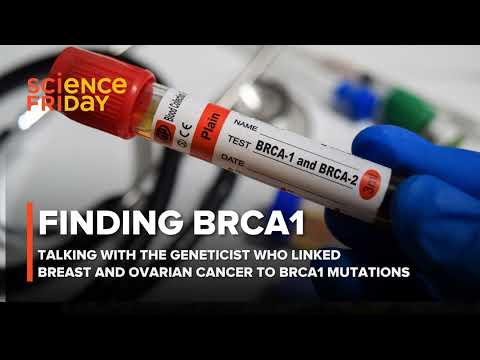
A trailblazing geneticist reflects on her life and work
Geneticist Mary-Claire King traces her journey from childhood math puzzles to groundbreaking discoveries, revealing how mentorship helped her persevere through PhD failures, how she proved humans and chimps share 99% of protein-coding DNA, and how the 1973 Chile coup redirected her toward cancer genetics.

The Evolution Of An Enzyme Engineer Who Changed Chemistry
Nobel laureate Dr. Francis Arnold revolutionized chemistry by developing directed evolution, a method to breed enzymes like livestock for specific industrial tasks from laundry detergents to pollution cleanup. She predicts that within 5-10 years, AI integration will enable scientists to 'vibe code' enzymes capable of performing virtually any chemical transformation on demand.