Looking for life in the clouds of Venus
TL;DR
MIT astrophysicist Dr. Sarah Seager discusses the scientific rationale for primitive life existing in Venus's sulfuric acid clouds, where temperatures are surprisingly habitable, and details the Morning Star Missions designed to detect complex organic molecules and eventually return samples to Earth.
☁️ The Case for Cloud Life 2 insights
Life's requirements met in Venusian clouds
While Venus's surface melts lead at 462°C, its cloud layers 50-60 km up maintain Earth-like temperatures of 0-50°C with liquid droplets and solar energy, meeting the three fundamentals for life that Carl Sagan first identified over 50 years ago.
Primitive life requires alien biochemistry
Any Venusian life would be microscopic and single-celled with fundamentally different chemistry than Earth life, as standard DNA and RNA are destroyed instantly by concentrated sulfuric acid.
🧪 Laboratory Breakthroughs 2 insights
Amino acids stable in sulfuric acid
Laboratory experiments demonstrate that 19 of 20 standard amino acids remain stable in concentrated sulfuric acid, with some peptides also showing resistance, challenging assumptions about biochemical limits.
DNA analog PNA survives acid environment
Seager's team demonstrated that Peptide Nucleic Acid (PNA), a synthetic DNA analog, remains stable at room temperature and up to 50°C in sulfuric acid, proving information-carrying molecules can exist in such environments.
🚀 The Morning Star Missions 2 insights
Rocket Lab mission targets cloud organics
The first mission, funded largely privately in partnership with Rocket Lab, will deploy a NASA-supplied heat-shielded capsule into Venus's clouds for five minutes to search for organic molecules using a custom-built instrument.
Sample return is ultimate mission goal
The consortium plans a series of escalating missions, contingent on launch windows every 18 months, culminating in bringing Venusian cloud samples back to Earth for analysis with sophisticated terrestrial equipment.
Bottom Line
The search for extraterrestrial life must expand beyond Earth-centric biochemistry assumptions, with upcoming Venus missions capable of detecting complex organic molecules that could indicate alternative life forms thriving in sulfuric acid clouds.
More from MIT Technology Review
View all
How does the gut-brain connection work?
Neurogastroenterologists Dr. Emran Mayer and Dr. Trisha Pesria explain that the gut operates as an autonomous 'second brain' containing 500 million neurons, communicating bidirectionally with the head brain primarily via the vagus nerve—where 80% of signals travel upward—suggesting that neurological diseases like Parkinson's may originate in the gut decades before brain symptoms appear.
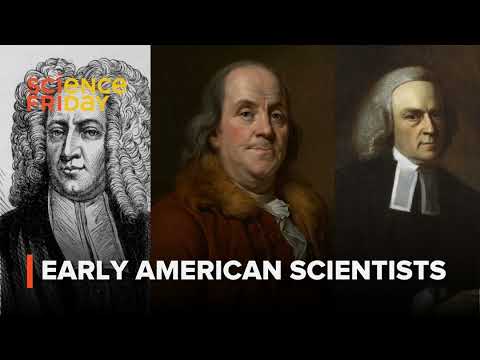
What was science like in America 250 years ago?
Colonial America's scientific culture was defined by "natural philosophers"—practical tinkerers like Franklin, Winthrop, and Jefferson who emphasized empirical observation, rigorous documentation, and replicable experiments. Their work established scientific inquiry as a foundational pillar of the new democracy, with international collaboration enabling breakthroughs from electricity to astronomy despite wartime hostilities.

What was science like in America 250 years ago?
Colonial American science was driven by 'natural philosophers' like Benjamin Franklin and John Winthrop who combined artisan craftsmanship with rigorous data collection and international collaboration, establishing scientific inquiry as a foundational value enshrined in the Constitution.

Even Nobel Prize winners deal with imposter syndrome
Nobel laureate Ardem Patapoutian shares his journey from Lebanese civil war refugee to pioneering neuroscientist, revealing how imposter syndrome persisted even at the peak of his career and why curiosity-driven research requires both ambitious dreaming and practical execution.