Ask the Author with Daniel H. Wilson / Live Q&A 📱
TL;DR
Robotics PhD Daniel H. Wilson discusses his sci-fi thriller "Hole in the Sky," exploring humanity's confrontation with incomprehensible cosmic entities through military, scientific, and Cherokee worldviews, while reflecting on his pivot from engineer to author.
📖 The Novel: Hole in the Sky 3 insights
Quantum predictions drive the narrative
The story centers on 'the pattern,' a quantum computer using retrocausation to predict future events with perfect accuracy, monitored by a scientist known as 'the man downstairs' in a secret underground facility.
Cherokee Nation setting and characters
Set within the Cherokee Nation, the thriller follows an unlikely crew including a single father, astrophysicist, and military threat forecaster decoding cryptic messages about an approaching unidentified object.
Shift toward cosmic horror
Unlike his typical techno-thrillers where science solves everything, this book embraces Lovecraftian horror where the entity is genuinely incomprehensible to human minds and cannot be understood or defeated through technology.
🔄 From Robotics to Writing 3 insights
PhD pivots to fiction
Despite earning a PhD in robotics and master's degrees in machine learning from Carnegie Mellon, Wilson chose writing because he discovered his natural talent lay in articulating complex ideas rather than pure mathematics.
Competition reveals true strengths
Studying alongside mathematical geniuses at Carnegie Mellon provided 'brutal illumination' that his contributions were strongest in communication, leading him to pursue letters instead of robotics.
Following natural aptitude
Wilson realized he had been 'swimming upstream' for years in robotics and decided to follow his childhood passion for science fiction, resulting in a 20-year career writing from his Portland office.
🔮 Philosophy of the Unknown 2 insights
Three cultural responses to mystery
The novel contrasts the military impulse to destroy the unknown, the scientific drive to exploit and categorize it, and the Cherokee perspective of accepting mystery as an integral part of existence.
Limits of human perception
Wilson explores how human sensory apparatus evolved solely for survival and reproduction, rendering us blind to cosmic realities that could destroy our minds if glimpsed without the proper cultural framework.
Bottom Line
Identify your natural aptitudes through honest comparison with peers, then have the courage to pivot toward work that leverages your true strengths rather than forcing success in mismatched fields.
More from MIT Technology Review
View all
How does the gut-brain connection work?
Neurogastroenterologists Dr. Emran Mayer and Dr. Trisha Pesria explain that the gut operates as an autonomous 'second brain' containing 500 million neurons, communicating bidirectionally with the head brain primarily via the vagus nerve—where 80% of signals travel upward—suggesting that neurological diseases like Parkinson's may originate in the gut decades before brain symptoms appear.
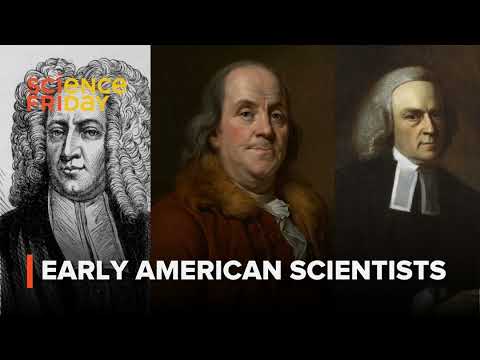
What was science like in America 250 years ago?
Colonial America's scientific culture was defined by "natural philosophers"—practical tinkerers like Franklin, Winthrop, and Jefferson who emphasized empirical observation, rigorous documentation, and replicable experiments. Their work established scientific inquiry as a foundational pillar of the new democracy, with international collaboration enabling breakthroughs from electricity to astronomy despite wartime hostilities.

What was science like in America 250 years ago?
Colonial American science was driven by 'natural philosophers' like Benjamin Franklin and John Winthrop who combined artisan craftsmanship with rigorous data collection and international collaboration, establishing scientific inquiry as a foundational value enshrined in the Constitution.

Even Nobel Prize winners deal with imposter syndrome
Nobel laureate Ardem Patapoutian shares his journey from Lebanese civil war refugee to pioneering neuroscientist, revealing how imposter syndrome persisted even at the peak of his career and why curiosity-driven research requires both ambitious dreaming and practical execution.