The Investor Behind Costco, Starbucks, and Blackstone | Tony James on The a16z Show
TL;DR
Tony James details his 25-year journey transforming Donaldson, Lufkin & Jenrette from a struggling five-person team into a $29 billion Wall Street powerhouse through merchant banking and high-yield debt, while sharing insights from early investments in Costco and Starbucks and the decision to sell at the 2000 market peak.
🏗️ Building DLJ from the Ground Up 3 insights
Joining a sub-major firm in 1975
James joined DLJ when it had only five bankers and hadn't completed a deal in two years, choosing it for the unstructured environment and growth potential despite over 100 larger competitors.
Riding the S-curve of growth
Starting at the ground floor created a positive feedback loop where early responsibilities accelerated learning and confidence, allowing the firm to grow over 15% annually for 25 consecutive years to become the fifth-largest securities firm.
Pioneering the merchant bank model
Inspired by KKR's 1980 Houdaille LBO, James recognized that big firms' ambivalence toward principal investing created a massive runway to build a private equity business that reached $29 billion in AUM by 2000.
🎯 Competing With Limited Capital 3 insights
Betting the firm on bridge loans
To compete with Drexel's 'highly confident' letters despite having only a $300 million balance sheet, DLJ created a dedicated bridge fund and bet the entire firm on every loan, pricing deals to trade up and building dominant market share.
Inheriting the high-yield market
When Drexel collapsed, DLJ's established position allowed them to capture 40% of all high-yield trading volume for 12 years and recruit top talent like Bennett Goodman, making it Wall Street's most profitable business.
Believing in young talent
James consistently bet on exceptional young professionals early in their careers, giving them responsibilities beyond their experience level, which drove the firm's aggressive expansion into new sectors.
🛒 Iconic Retail Investments 3 insights
Leading Series A into Costco and Starbucks
In the 1980s, James led the Series A investment in Costco after recognizing the proven Price Club model, while also backing Starbucks, focusing on prosaic, understandable businesses rather than unproven technology.
Jim Sinegal's relentless execution
James credits Costco's success to Jim Sinegal's maniacal focus on flawless execution, noting he traveled 225 days annually, knew the price of every item, and never compromised on serving the customer.
Focus as the core philosophy
Working alongside Charlie Munger on Costco's board reinforced the importance of 'focus, focus, focus' and building for the long term through impeccable operational standards rather than financial engineering.
⏰ Timing the Perfect Exit 3 insights
Selling at the 2000 peak
James pushed to sell DLJ to Credit Suisse for $14 billion in cash in 2000, recognizing the market was unsustainable just before Morgan Stanley sold for $8 billion a few years later.
Recognizing structural headwinds
The decision was driven by the repeal of Glass-Steagall bringing deep-pocketed banks into competition, the commoditization of commissions, regulatory changes affecting research, and balance sheet constraints limiting bridge loan capacity.
Preserving cultural legacy
While many employees initially blamed him for ending the 'kumbaya' culture, the sale prevented decline as Swiss bank integration created institutional friction that wasted away the principal business.
Bottom Line
Build your career by joining small, growing organizations early, bet on proven models with relentless operational execution rather than financial complexity, and exit decisively when structural industry shifts turn competitive advantages into liabilities.
More from a16z Podcast
View all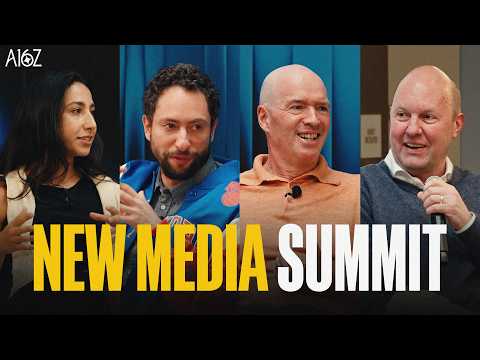
The Media Game Has Changed
The media landscape has shifted from defense-oriented legacy outlets demanding plastic, controversy-free performances to an offense-driven ecosystem where authenticity and founder-led personal brands dominate; success now requires treating public conversations like private ones and building direct channels rather than relying on traditional press.

Why AI Feels Like the Internet in 1997 | Benedict Evans on a16z
Benedict Evans compares today's AI landscape to the internet in 1997, arguing that agentic coding has emerged as the first true product-market fit use case while the industry grapples with severe infrastructure scarcity and an uncertain future where foundation models risk becoming commoditized infrastructure rather than value-capturing platforms.

The Rule for Picking AI Winners | The a16z Show
Frontier AI model companies are achieving hyperscaler-scale revenue growth with less than 5% economic diffusion, creating extraordinary value creation potential, yet rapid technological shifts and uncertain market structures make predicting ultimate winners increasingly difficult compared to prior tech cycles.

Private Markets and The Future of Capital Allocation with Marc Rowan | The a16z Show
Marc Rowan, CEO of Apollo Global Management, argues that extreme concentration in public markets has made private markets essential for diversification, detailing how Apollo evolved from a Drexel offshoot into a $1 trillion retirement services giant bridging the gap between infrastructure borrowers and income-seeking retirees.