Agentic Parenting, Voice Interfaces and The Care Infrastructure | The a16z Show
TL;DR
Former YC founder Jesse Genet explains how AI agents enable her to homeschool four children under five while simultaneously building technical projects, reversing her resignation to a five-year career pause and demonstrating how voice-first automation creates a new infrastructure for caregiving.
🤖 Agentic Automation for Homeschooling 3 insights
Self-replicating agent systems
Jesse built a meta-system where her agents autonomously spin up new specialized agents without her touching the machine, allowing technical infrastructure to expand while she handles childcare.
Curriculum-integrated lesson planning
She feeds agents complete curriculum PDFs and her educational philosophy via voice notes, enabling them to generate personalized lesson plans that reference specific physical materials she owns via photos.
Automated progress logging
After sub-30-second voice notes and quick photos of completed work, agents generate detailed narrative logs written in a loving, parent-like voice that capture educational milestones without manual documentation.
🎙️ Voice-First Technical Workflows 2 insights
Mobile-native development interface
All interaction with AI happens through voice notes and photos rather than typing, making it possible to build complex technical systems during fragmented 10-15 minute windows between childcare tasks.
Asynchronous continuity management
The system maintains project continuity across interrupted sessions, allowing her to issue instructions and return hours later to review agent outputs without losing context.
⚖️ The Care Infrastructure Revolution 3 insights
Eliminating the career-sacrifice trade-off
Previously resigned to a five-year break from technical work to be present with her children, Jesse now reports building better projects than ever while spending nearly all waking hours with her kids.
Benevolent neglect parenting strategy
She deliberately structures independent play sessions of 2+ hours for her children to build self-sufficiency, using this protected time to supervise her agents while remaining physically present.
Natural language technical democratization
As a non-technical co-founder who avoided terminals until six months ago, she now uses Claude and cloud code to build sophisticated applications using only natural language, no traditional coding required.
Bottom Line
Parents can now maintain ambitious technical careers while deeply present with young children by delegating administrative and documentation tasks to voice-first AI agents, effectively creating a new infrastructure for caregiving that eliminates the traditional trade-off between professional growth and parenting.
More from a16z Podcast
View all
Software in the Age of Agents | The a16z Show
The rise of AI agents is accelerating a shift toward 'headless' software where APIs and business logic matter more than user interfaces, but speakers warn that underestimating the complexity and stickiness of enterprise systems—where decades of regulatory compliance and institutional knowledge create deep moats—is a critical error as the industry moves beyond human-centric workflow design.

a16z Goes Global: Why American Tech Must Lead the World
a16z outlines its global expansion strategy to ensure American technological leadership in the AI era, arguing that AI models encode cultural values and that the U.S. must help allies adopt Western technology to prevent authoritarian 'digital colonization' and maintain national security through innovation.

Jake Paul on Going From YouTube to Boxing to Investing | a16z ft. Anti Fund
Jake Paul and Anti Fund co-founder Geoffrey Woo announce their oversubscribed $100 million growth fund backed by tier-one LPs like Andreessen Horowitz, while explaining how Paul's resilience and analytical operator mindset translate from entertainment to backing frontier tech companies.
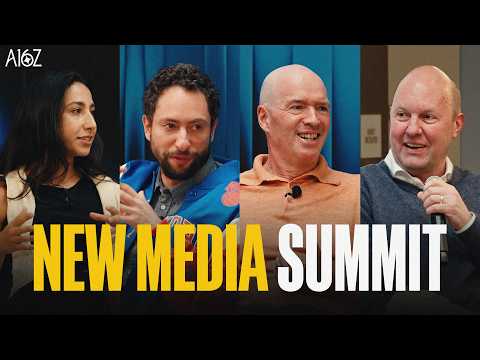
The Media Game Has Changed
The media landscape has shifted from defense-oriented legacy outlets demanding plastic, controversy-free performances to an offense-driven ecosystem where authenticity and founder-led personal brands dominate; success now requires treating public conversations like private ones and building direct channels rather than relying on traditional press.