Marc Andreessen on how the internet changed news, politics, and outrage | The a16z Show
TL;DR
Marc Andreessen argues that the internet has recreated and accelerated CNN's "randemonium" model—where media locks onto the single most compelling "current thing"—creating a global village of 8 billion people who experience reality as a continuous series of 2.5-day viral outrage cycles that make political prediction impossible while potentially reducing physical violence.
📺 The Birth of 'Randemonium' 3 insights
CNN's original 'randemonium' coverage model
Founder Reese Schonfeld invented the concept of identifying the single most compelling 'current thing' and covering it continuously with raw, fragmentary reports regardless of polish or verification.
Internet reinvented randemonium at hyperspeed
Social media platforms, particularly X and streaming services, have scaled this model globally, creating an endless sequence of 'situations' requiring constant monitoring by billions.
News prioritizes novelty over importance
Media organizations focus on the 'new' rather than the 'important' because audiences inherently crave the hot, outrageous topic over substantive analysis.
🌍 The Global Village Effect 3 insights
McLuhan's global village becomes reality
The internet created a 'global village' where 8 billion people occupy the same virtual space, eliminating privacy and forcing constant exposure to global conflicts and opinions.
Human cognition overwhelmed by scale
Humans evolved to maintain relationships with roughly 150 people (Dunbar's number), but the global village demands processing interactions with billions, creating a disorienting cognitive overload.
Digital anger reduces physical violence
Despite constant online outrage, political violence in Western society is at an all-time low because social media channels aggression that historically resulted in physical duels or street violence.
📱 Viral Outrage Mechanics 3 insights
Viral cycles last 2.5 days
Every social media meme explosion follows a predictable pattern of outrage and decay lasting approximately two and a half days before being completely forgotten and replaced.
All events become viral memes
Andreessen adapts McLuhan's theory to argue that on the internet, every event—no matter how serious—becomes a viral meme and subsequent moral panic with scapegoats.
Politics now fundamentally unpredictable
With roughly 100 viral cycles occurring between current events and elections, predicting political outcomes is impossible because voters react only to the 'current thing' of that specific day.
Bottom Line
Treat viral outrage as ephemeral 2.5-day noise rather than meaningful signal when making decisions, focus on structural fundamentals like economics for political prediction, and recognize that digital anger may actually be preventing physical violence.
More from a16z Podcast
View all
Software in the Age of Agents | The a16z Show
The rise of AI agents is accelerating a shift toward 'headless' software where APIs and business logic matter more than user interfaces, but speakers warn that underestimating the complexity and stickiness of enterprise systems—where decades of regulatory compliance and institutional knowledge create deep moats—is a critical error as the industry moves beyond human-centric workflow design.

a16z Goes Global: Why American Tech Must Lead the World
a16z outlines its global expansion strategy to ensure American technological leadership in the AI era, arguing that AI models encode cultural values and that the U.S. must help allies adopt Western technology to prevent authoritarian 'digital colonization' and maintain national security through innovation.

Jake Paul on Going From YouTube to Boxing to Investing | a16z ft. Anti Fund
Jake Paul and Anti Fund co-founder Geoffrey Woo announce their oversubscribed $100 million growth fund backed by tier-one LPs like Andreessen Horowitz, while explaining how Paul's resilience and analytical operator mindset translate from entertainment to backing frontier tech companies.
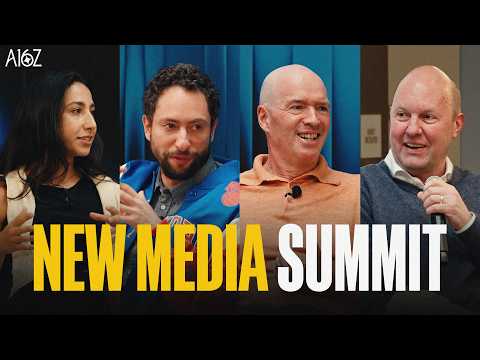
The Media Game Has Changed
The media landscape has shifted from defense-oriented legacy outlets demanding plastic, controversy-free performances to an offense-driven ecosystem where authenticity and founder-led personal brands dominate; success now requires treating public conversations like private ones and building direct channels rather than relying on traditional press.