Signüll: Most People Are in the Stone Ages of AI | The a16z Show
TL;DR
Signüll argues that while AI capabilities have advanced dramatically, most users remain stuck on basic tasks, creating a massive accessibility gap. He explores how modern AI development now requires architecting personality and soul rather than just utility, and advises founders to pursue passion-driven problems rather than forcing AI into verticals they don't care about.
💻 The AI Capability Gap 2 insights
Most users remain in the stone ages of AI
Despite over a billion people using AI tools, the vast majority utilize only basic functions while advanced capabilities remain inaccessible, creating a massive gap between technical potential and actual usage.
Making AI power accessible is the core challenge
OpenAI's primary hurdle is translating complex model capabilities into easily accessible forms, with current agent technology still feeling primitive and inaccessible to everyday individuals.
🎭 Personality and Soul in AI 2 insights
Developing AI personality is harder than previous cycles
Unlike Web 2.0's delivery vehicles, modern AI requires architecting human-like personalities and intelligence, representing a shift from building infrastructure to crafting consciousness.
Claude's artisan approach creates soulful interactions
Anthropic's Claude stands out by feeling less robotic and more soulful compared to utilitarian models, raising fundamental questions about what constitutes human essence in artificial systems.
🌍 Technology and Cultural Acceleration 2 insights
Technology cycles are accelerating at 100x speed
The pace of change has compressed time perception so drastically that events from last month feel like they happened ten years ago, fundamentally altering how culture evolves.
AI should facilitate human self-understanding and growth
Rather than making us Neanderthals with iPhones, technology should enable intellectual and spiritual growth by helping individuals understand themselves better through introspective tools.
🚀 Entrepreneurship in the AI Era 2 insights
Build what you're passionate about, not just what AI enables
Founders should focus on problems they genuinely care about rather than forcing AI use cases into industries like real estate simply because the technology exists.
Creation requires emotional spark and enjoyment
Drawing from the Bhagavad Gita and Rick Rubin's philosophy, successful entrepreneurship requires feeling the work and enjoying the process itself, not just attachment to outcomes.
Bottom Line
To build meaningful AI companies, focus on passion-driven problems you genuinely care about rather than chasing AI trends, while recognizing that the next frontier involves making powerful AI personalities accessible and soulful rather than merely utilitarian.
More from a16z Podcast
View all
Software in the Age of Agents | The a16z Show
The rise of AI agents is accelerating a shift toward 'headless' software where APIs and business logic matter more than user interfaces, but speakers warn that underestimating the complexity and stickiness of enterprise systems—where decades of regulatory compliance and institutional knowledge create deep moats—is a critical error as the industry moves beyond human-centric workflow design.

a16z Goes Global: Why American Tech Must Lead the World
a16z outlines its global expansion strategy to ensure American technological leadership in the AI era, arguing that AI models encode cultural values and that the U.S. must help allies adopt Western technology to prevent authoritarian 'digital colonization' and maintain national security through innovation.

Jake Paul on Going From YouTube to Boxing to Investing | a16z ft. Anti Fund
Jake Paul and Anti Fund co-founder Geoffrey Woo announce their oversubscribed $100 million growth fund backed by tier-one LPs like Andreessen Horowitz, while explaining how Paul's resilience and analytical operator mindset translate from entertainment to backing frontier tech companies.
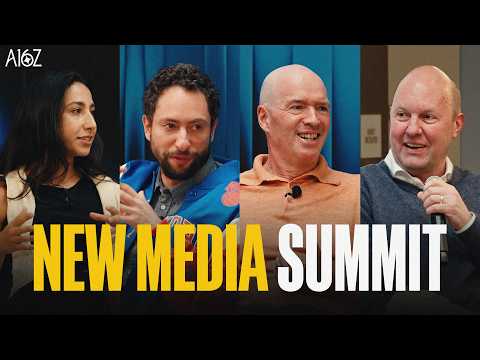
The Media Game Has Changed
The media landscape has shifted from defense-oriented legacy outlets demanding plastic, controversy-free performances to an offense-driven ecosystem where authenticity and founder-led personal brands dominate; success now requires treating public conversations like private ones and building direct channels rather than relying on traditional press.