The Era of AI Agents | Aaron Levie on The a16z Show
TL;DR
Aaron Levie argues that AI adoption will take longer than Silicon Valley expects, with the next evolution shifting from code-generating agents to "computer use" agents that interact with existing SaaS tools via APIs and CLI, fundamentally changing software architecture while requiring domain experts to develop systems thinking skills.
🖥️ The Agent Interface Revolution 3 insights
Software must be rebuilt for agent-first interaction
Organizations deploying 100-1000x more agents than people must architect software for API/CLI consumption rather than traditional human interfaces.
The paradigm shifts from code generation to computer use
Effective agents now leverage existing SaaS tools and workflows through computer interfaces, moving beyond the "vibe coding" approach toward practical automation of legacy systems.
CLI becomes the primary agent gateway
Box's new CLI demonstrates how natural language orchestration of existing tools via Claude Code provides immediate utility without requiring underlying system replacement.
🔄 Abstraction Layers and Workforce Evolution 3 insights
Jobs evolve up the abstraction stack
Following the historical pattern where spreadsheet-savvy analysts replaced rooms of interns, today's complex agent orchestration will commoditize into standard business skills within a few years.
Systems thinking creates current adoption friction
Most workers cannot algorithmically document their workflows as flowcharts, limiting immediate agent utility to technical "systems thinkers" until interfaces become more intuitive.
Domain expertise captures the leverage
While agents handle technical execution, competitive advantage flows to domain experts who can orchestrate these tools, concentrating value in strategic judgment rather than tool operation.
🏢 Enterprise Systems and Integration 3 insights
Agents unlock trapped legacy capability
AI excels at navigating complex enterprise software like SAP by interpreting help documentation and interfaces that previously bottlenecked human users for decades.
Runtime integration challenges IT governance
Enterprises must balance "integration on demand" capabilities against system-of-record risks, likely imposing read-only constraints for several years before allowing agent-driven write access.
Backend systems converge toward generic APIs
While consumption layers become agent-optimized and fluid, underlying systems of record will likely consolidate into standardized database interfaces that agents query dynamically.
Bottom Line
Organizations must immediately architect for agent-first interfaces (APIs/CLIs) while recognizing that competitive advantage will accrue to domain experts who can orchestrate these systems through systems thinking, not just technical implementation.
More from a16z Podcast
View all
Software in the Age of Agents | The a16z Show
The rise of AI agents is accelerating a shift toward 'headless' software where APIs and business logic matter more than user interfaces, but speakers warn that underestimating the complexity and stickiness of enterprise systems—where decades of regulatory compliance and institutional knowledge create deep moats—is a critical error as the industry moves beyond human-centric workflow design.

a16z Goes Global: Why American Tech Must Lead the World
a16z outlines its global expansion strategy to ensure American technological leadership in the AI era, arguing that AI models encode cultural values and that the U.S. must help allies adopt Western technology to prevent authoritarian 'digital colonization' and maintain national security through innovation.

Jake Paul on Going From YouTube to Boxing to Investing | a16z ft. Anti Fund
Jake Paul and Anti Fund co-founder Geoffrey Woo announce their oversubscribed $100 million growth fund backed by tier-one LPs like Andreessen Horowitz, while explaining how Paul's resilience and analytical operator mindset translate from entertainment to backing frontier tech companies.
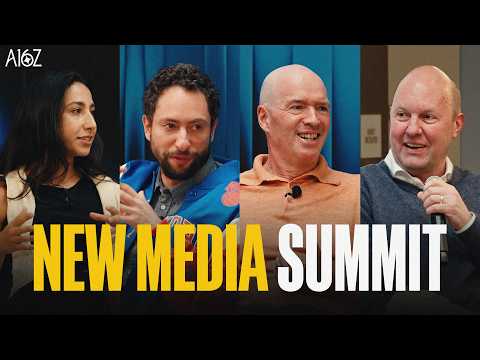
The Media Game Has Changed
The media landscape has shifted from defense-oriented legacy outlets demanding plastic, controversy-free performances to an offense-driven ecosystem where authenticity and founder-led personal brands dominate; success now requires treating public conversations like private ones and building direct channels rather than relying on traditional press.