Hormuz whiplash / Russia, Ukraine shred ceasefires / Modern warfare
TL;DR
This episode examines the rapid collapse of the U.S. 'Project Freedom' military escort operation in the Strait of Hormuz amid stalled nuclear negotiations with Iran, alongside dueling, immediately violated ceasefires between Russia and Ukraine ahead of Moscow's scaled-back Victory Day celebrations.
🚢 US-Iran 'Project Freedom' Debacle 4 insights
Project Freedom announced and paused within 48 hours
The U.S. launched then immediately froze a military escort operation for commercial ships through the Strait of Hormuz, with President Trump pivoting from praising the mission to threatening renewed bombing while nuclear talks continue.
'Red, white, and blue dome' failed to move ships
Despite Secretary Hegseth's deployment of over 100 aircraft and warships to create a protective dome, approximately 1,500 vessels—including 1,000 ocean-going ships—remain anchored due to security fears and Iranian threats to impose tolls.
Nuclear negotiation positions remain far apart
The U.S. demands a 20-year enrichment halt and surrender of 1,000 lbs of 60% enriched uranium at Esfahan via Pakistani mediators, while Iran insists on a 5-year pause and sovereign rights to control the strategic waterway.
Global energy markets face sustained pressure
The ongoing blockade has driven U.S. gas prices to $4.55 per gallon and increased fertilizer and diesel costs worldwide as shipping companies refuse to risk transit despite military assurances.
🇷🇺 Russia-Ukraine Ceasefire Theater 4 insights
Victory Day truce proposals weaponized
Russia announced a unilateral May 8-9 ceasefire for its WWII commemoration while threatening to bomb central Kyiv if violated, prompting President Zelenskyy to counter-propose an earlier May 6-7 truce that Russia immediately violated with 102 drone attacks.
Moscow parade stripped of military hardware
For the first time in recent history, Russia eliminated displays of tanks and ICBMs from Red Square due to vulnerability to Ukrainian drone and missile strikes, also revoking Western press accreditations citing vague 'capacity reductions.'
Internet blackouts disrupt Russian daily life
Authorities imposed rolling mobile internet blackouts across Moscow and St. Petersburg under the guise of security measures, blocking VPNs and disrupting banking and transportation apps, which has become a catalyst for public war fatigue.
Putin draws direct line to WWII
Putin explicitly framed the Ukraine invasion as a continuation of the Soviet fight against Nazi Germany, even as the current conflict has now lasted longer than Russia's participation in WWII.
📡 Modern Warfare and Information Control 2 insights
Drone warfare reshapes strategic signaling
The threat of Ukrainian drones and missiles forced Russia to abandon traditional military parade displays and implement unprecedented digital lockdowns, demonstrating how unmanned systems now dictate territorial security measures.
Economic warfare via shipping blockades
Both the U.S. and Iran are utilizing control of the Strait of Hormuz as an economic weapon, with Iran leveraging toll threats and the U.S. utilizing naval blockades to pressure diplomatic outcomes.
Bottom Line
Diplomatic theater and temporary ceasefires cannot mask the operational reality that military exchanges continue unabated and critical shipping lanes remain frozen, leaving global energy markets and civilian populations bearing the costs of unresolved conflicts.
More from How I Built This (NPR)
View all
Iran “deal” / Winners and losers / Regional impact
A preliminary three-page US-Iran deal ends four months of war by reopening the Strait of Hormuz and launching 60-day nuclear negotiations, revealing a dramatic reshuffling of regional power that strengthens Iran's regime, isolates Israel, and exposes growing rifts between Washington and its traditional Middle East allies.

Vogue's new leader on why the magazine still matters | Newsmakers
Chloe Malle, the new head of editorial content for American Vogue, discusses her unconventional career path from real estate reporter to fashion authority, arguing that Vogue's curation and authority matter more than ever in an era of digital noise and global uncertainty.
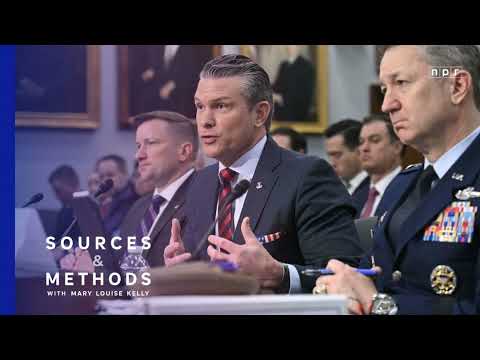
Hegseth blocks promotions / National Guard surge / Downed Apache
Defense Secretary Pete Hegseth is blocking promotions of 24 officers—60% Black or female—without explanation and firing dissenting leaders like General Randy George, creating a climate of fear at the Pentagon, while National Guard troops surge in DC and other cities for crime patrols despite limited effectiveness.
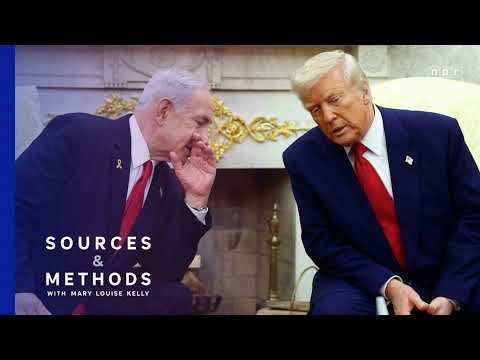
Trump, Netanyahu at odds / Elusive Iran deal
President Trump and Israeli Prime Minister Benjamin Netanyahu are increasingly at odds over how to end the war with Iran, with Trump pursuing diplomatic negotiations while Netanyahu pushes for continued military escalation, creating friction that threatens to undermine potential deals.