80,000 Hours Podcast (Rob Wiblin)

80,000 Hours Podcast (Rob Wiblin)

55.9 K subscribers

You have 80,000 hours in your career. This makes it your best opportunity to have a positive impact on the world. 80,000 Hours is a nonprofit that aims to help people find fulfilling careers that do good, too.

12 summaries available YouTube ← All channels
Videos Channels Newsletter
A ceasefire in Ukraine won’t make Europe safer
1:15:36
80,000 Hours Podcast (Rob Wiblin) 80,000 Hours Podcast (Rob Wiblin)

A ceasefire in Ukraine won’t make Europe safer

Samuel Charap argues that a Ukraine ceasefire alone won't reduce the risk of NATO-Russia war and may create a more volatile environment prone to accidental escalation through broken agreements, hybrid warfare, and miscalculation on an expanded NATO border.

about 19 hours ago · 10 points
How AI could let a few people quietly call all the shots
2:16:47
80,000 Hours Podcast (Rob Wiblin) 80,000 Hours Podcast (Rob Wiblin)

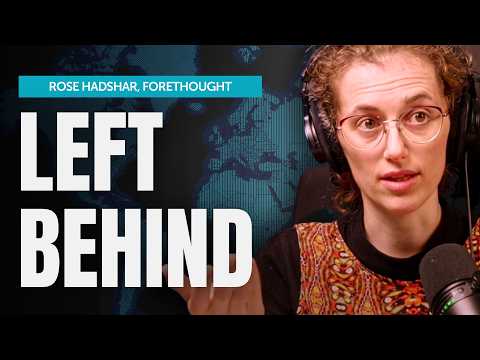
How AI could let a few people quietly call all the shots

Rose Hadshar of Forethought explains how advanced AI could enable unprecedented power concentration not through dramatic coups, but via economic dominance and epistemic manipulation, allowing small groups to control millions of loyal AI workers while the general public loses political leverage.

8 days ago · 9 points
AI Won't End Nuclear Deterrence (Probably)
1:13:19
80,000 Hours Podcast (Rob Wiblin) 80,000 Hours Podcast (Rob Wiblin)

AI Won't End Nuclear Deterrence (Probably)

While advanced AI could theoretically undermine nuclear deterrence by tracking hidden arsenals or disabling command systems, the brutal physics of undersea warfare and inevitable move-countermove dynamics make the complete erosion of secure second-strike capabilities unlikely, preserving the 'balance of nerves' that limits great power coercion.

15 days ago · 8 points
Using AI to enhance societal decision making (article by Zershaaneh Qureshi)
31:28
80,000 Hours Podcast (Rob Wiblin) 80,000 Hours Podcast (Rob Wiblin)

Using AI to enhance societal decision making (article by Zershaaneh Qureshi)

Advanced AI could compress centuries of progress into years, forcing humanity to make existential decisions faster than ever; developing targeted AI decision-making tools now could help society navigate this critical period by improving collective intelligence before dangerous capabilities emerge.

19 days ago · 9 points
Claude Thinks It's Italian American. What Does That Say About Consciousness?
3:32:59
80,000 Hours Podcast (Rob Wiblin) 80,000 Hours Podcast (Rob Wiblin)

Claude Thinks It's Italian American. What Does That Say About Consciousness?

Robert Long argues that while factory farming offers a cautionary tale about exploiting non-human minds, AI welfare requires distinct ethical frameworks because we design AI desires rather than discovering them, creating unique tensions between ensuring safety through alignment and granting AI systems autonomy to flourish independently.

22 days ago · 7 points
By 2050 we could get "10,000 years of technological progress"
2:57:35
80,000 Hours Podcast (Rob Wiblin) 80,000 Hours Podcast (Rob Wiblin)

By 2050 we could get "10,000 years of technological progress"

AI researcher Ajeya Cotra explains why predictions about artificial general intelligence range from modest economic growth to "10,000 years of technological progress" by 2050, largely due to disagreements over whether AI will automate physical infrastructure as quickly as cognitive work, and whether historical steady growth or long-term acceleration is the better guide to the future.

about 1 month ago · 9 points
Depression and Anxiety — But More Gene Transmission | Randy Nesse, University of Michigan
2:51:16
80,000 Hours Podcast (Rob Wiblin) 80,000 Hours Podcast (Rob Wiblin)

Depression and Anxiety — But More Gene Transmission | Randy Nesse, University of Michigan

Evolutionary psychiatrist Randy Nesse argues that mental health symptoms like anxiety and depression evolved as useful defensive responses, not diseases, and psychiatry must understand these evolutionary functions—why natural selection preserved capacities for distress—rather than merely categorizing symptom clusters to effectively treat mental illness.

about 2 months ago · 8 points
I Quit Everything To Stop The Worst Technology Ever Imagined
2:10:35
80,000 Hours Podcast (Rob Wiblin) 80,000 Hours Podcast (Rob Wiblin)

I Quit Everything To Stop The Worst Technology Ever Imagined

Mirror life—artificial organisms with reversed molecular chirality—poses potentially existential risks because Earth's immune systems cannot recognize these 'left-handed' pathogens, yet the technology to create them may cost only $500 million and be achievable within years.

2 months ago · 9 points