LIVE: Von der Leyen, Kallas address EU diplomats at conference
TL;DR
EU leaders Ursula von der Leyen and Roberta Metsola addressed the EU Ambassadors Conference, urging diplomats to abandon slow institutional habits for faster decision-making in an unpredictable world, while reaffirming unwavering support for Ukraine, condemning the Iranian regime's destabilization, and accelerating Europe's strategic sovereignty through economic security and partnership diversification.
⚡ Institutional Reform & Strategic Reality 3 insights
Accelerated Decision-Making Required in Unpredictable World
Roberta Metsola emphasized that the EU can no longer afford its traditional slow consensus-building process and must abandon bureaucratic habits that prevent decisive action in a dangerous, fast-moving geopolitical landscape.
Europe Must Abandon Outdated Multilateral Custodianship
Ursula von der Leyen declared that Europe can no longer serve as mere custodian of a vanished postwar rules-based order and must forge a realistic, interest-driven foreign policy suited to contemporary threats.
Postwar Institutions Need Urgent Credibility Assessment
Von der Leyen called for a hard look at whether diplomatic institutions designed for stability and compromise now hinder rather than help Europe's credibility as a unified geopolitical actor.
🛡️ Crisis Response & Regional Security 3 insights
Sustained Support for Ukraine Remains Unwavering
Both leaders reaffirmed that Europe's commitment must match the threat level as the war enters year five, insisting any peace requires Ukrainian integrity and dignity under the principle of 'nothing about Ukraine without Ukraine'.
Iranian Regime Deserves No European Sympathy
Von der Leyen stated there should be 'no tears shed' for the Iranian regime that slaughtered its own people, while Metsola condemned recent attacks on Gulf shipping and expressed solidarity with Iranian protestors.
Middle East Conflict Spills Over to Europe
Von der Leyen highlighted existential risks to the international system from regional escalation, noting disruptions to energy, trade, and transport, plus attacks on NATO troops and British bases in Cyprus.
🌍 Sovereignty & Global Partnerships 3 insights
Generational Project of European Independence Underway
Von der Leyen outlined efforts to reduce strategic dependencies in defense, energy, semiconductors, and critical raw materials through diversification, derisking, and deeper partnerships with reliable allies.
Economic Security Tools Defend Member State Interests
The Commission President noted Europe is increasingly leveraging its market power, trading reach, and economic security instruments to counter foreign manipulation and defend against coercion.
Delayed Enlargement Creates Dangerous Power Vacuums
Metsola stressed that merit-based enlargement for Ukraine, Moldova, and the Western Balkans is a geopolitical necessity, warning that hesitation leaves space for adversaries to fill the void.
🤝 Strategic Relationship Resets 3 insights
Unique Window to Reset UK Relations
Metsola described a fleeting opportunity to build new pragmatic bridges with the United Kingdom based on unprecedented positive mood and willingness to find solutions respecting Brexit realities.
Transatlantic Alliance Requires Realistic Modern Adaptation
While affirming the US alliance as the backbone of security, both leaders urged clear-eyed recognition of disagreements and adaptation to modern realities rather than naive reliance on past structures.
Parliamentary Diplomacy Critical for Global Legitimacy
Metsola emphasized that European Parliament members build essential legitimacy for foreign policy, open doors in national parliaments for trade deals, and advance democracy support through 60 parliamentary networks worldwide.
Bottom Line
The EU must urgently reform its slow, consensus-driven institutions to match the speed of modern geopolitical threats, while leveraging economic power and strategic partnerships to build true sovereignty in an era where the old rules-based order no longer guarantees security.
More from Reuters
View all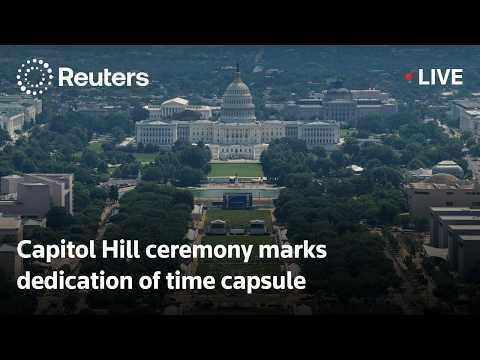
LIVE: Capitol Hill ceremony marks the dedication of time capsule
Congressional leaders gathered to dedicate a time capsule that will be sealed by the 119th Congress and opened in 2276 by the 244th Congress, containing artifacts from every state to commemorate America's 250th anniversary and convey current values to future generations.

What happens when the Federal Reserve goes quiet? | Econ World
New Federal Reserve Chair Kevin Walsh is spearheading a "silent revolution" by eliminating forward guidance and shortening statements to reduce market dependency on Fed signaling, sparking debate over whether less communication enhances or undermines central bank effectiveness during normal economic times.

LIVE: Outgoing British PM Keir Starmer takes questions in parliament
Outgoing Labour Prime Minister Keir Starmer defends his government's record on NHS investment, economic growth, and defense spending while facing sharp criticism from opposition leaders over his resignation and cabinet performance during his final parliamentary questioning session.

LIVE: US World Cup players speak from California base camp
US Men's National Team players highlight their tight-knit chemistry and competitive training culture as drivers of World Cup success, while discussing professional sacrifices, the importance of momentum, and the unique motivation of representing their home country on the West Coast.