What happens when the Federal Reserve goes quiet? | Econ World
TL;DR
New Federal Reserve Chair Kevin Walsh is spearheading a "silent revolution" by eliminating forward guidance and shortening statements to reduce market dependency on Fed signaling, sparking debate over whether less communication enhances or undermines central bank effectiveness during normal economic times.
🤐 The Silent Revolution 3 insights
Walsh ends forward guidance
New Fed Chair Kevin Walsh has eliminated forward guidance and shortened statements to force markets to set long-term rates based on economic supply and demand rather than central bank directives.
Reducing confusion from multiple voices
Walsh aims to eliminate mixed signals caused by constant commentary from numerous Fed officials, which creates uncertainty about the "modal message" for investors.
Preserving policy flexibility
By avoiding specific guidance when economic outcomes are uncertain, Walsh seeks to prevent the credibility damage that occurs when the Fed must reverse previously communicated policy paths.
🎯 Communication as Policy Tool 3 insights
Managing expectations shapes behavior
Central banks use language to deliberately shape public psychology about future inflation and rates, which directly influences current spending and investment decisions without changing actual policy rates.
The Draghi precedent
Mario Draghi's "whatever it takes" speech during the eurozone crisis stabilized markets through pure communication, as the commitment itself prevented collapse despite lacking supporting tools at the time.
Influencing the yield curve
While central banks only control short-term rates, their verbal guidance significantly impacts long-term borrowing costs for mortgages and government debt by steering market expectations at the long end of the curve.
📢 Evolution of Transparency 3 insights
From opacity to clarity
Fed communication evolved from Alan Greenspan's intentional opacity to Jay Powell's simplified eighth-grade-level explanations, reflecting a shift from mystery to democratic accountability.
Crisis tools vs. normal times
Forward guidance and transparency innovations like the dot plot proved effective during the 2008 crisis and COVID-19, but Walsh argues these crisis-appropriate tools are unnecessary and potentially harmful during normal conditions.
Bernanke's transparency legacy
Former Chair Ben Bernanke introduced post-meeting press conferences and quarterly economic projections to increase public accountability and enhance policy effectiveness through better information sharing.
Bottom Line
Central banks should reserve detailed forward guidance for crisis periods and remain strategically ambiguous during normal times to maintain maximum policy flexibility and prevent credibility damage from forecast errors.
More from Reuters
View all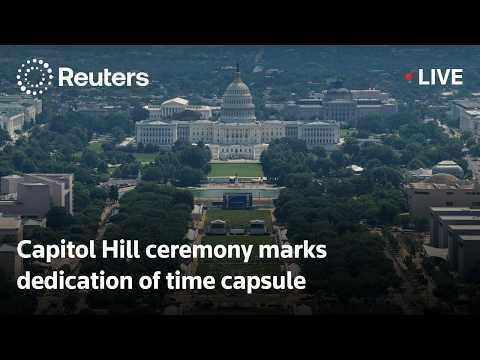
LIVE: Capitol Hill ceremony marks the dedication of time capsule
Congressional leaders gathered to dedicate a time capsule that will be sealed by the 119th Congress and opened in 2276 by the 244th Congress, containing artifacts from every state to commemorate America's 250th anniversary and convey current values to future generations.

LIVE: Outgoing British PM Keir Starmer takes questions in parliament
Outgoing Labour Prime Minister Keir Starmer defends his government's record on NHS investment, economic growth, and defense spending while facing sharp criticism from opposition leaders over his resignation and cabinet performance during his final parliamentary questioning session.

LIVE: US World Cup players speak from California base camp
US Men's National Team players highlight their tight-knit chemistry and competitive training culture as drivers of World Cup success, while discussing professional sacrifices, the importance of momentum, and the unique motivation of representing their home country on the West Coast.

LIVE: UN chief Guterres speaks at London Climate Week
UN Secretary-General António Guterres joined London Mayor Sadiq Khan and Bloomberg Philanthropies at London Climate Action Week to emphasize that cities are leading the global climate fight through measurable actions like clean air zones and renewable transitions, while calling for local leaders to have greater authority in international climate governance.