Jordan Peterson: "When You Stop Needing Approval, You Become Dangerous"
TL;DR
Jordan Peterson argues that meaningful personal transformation comes through humble, incremental self-improvement compounded over time, while warning that modern universities have abandoned education for postmodern indoctrination that reduces all human motivation to power and fractures society into competing identity groups.
🌱 The Architecture of Incremental Growth 4 insights
Prayer as self-interrogation
The proper form of prayer involves sitting on the edge of your bed and genuinely asking what you could put right today to make life slightly less awful, which yields immediate answers if asked with intent.
Compare to your past self
Rule four is to compare yourself to who you were yesterday rather than to someone else today, a humble inquiry that exists within everyone's grasp and requires no interference with others.
Compound interest of virtue
The Matthew Principle applies to self-improvement: as you wander toward the edge, probability of falling increases non-linearly, but as you improve, each success increases the probability of the next, creating exponential returns over time.
Sacrifice required for truth
Asking what you're doing wrong requires sacrificing parts of yourself—often burned out, bitter, or arrogant aspects—that you may nevertheless be attached to, making the inquiry genuinely difficult.
⚙️ Behavioral Mechanics of Change 4 insights
Break goals into attainable units
Effective behavioral change requires breaking aims into small, negotiable steps—such as tracking video game time for a week before attempting reduction—rather than attempting dramatic immediate shifts.
The tracking baseline
Before changing behavior, simply track the current state for a week to establish parameters, as measurement itself constitutes progress and prevents the self-deception of assuming you already know your habits.
Non-linear improvement trajectory
Improvement follows a jagged path where backsliding occurs; progress should be calculated over months rather than days, and temporary regression does not constitute failure but statistical noise in an upward trend.
Calculate the 10-year projection
Reward incremental improvements without cynicism by projecting weekly gains across a decade, revealing that even half that sustained progress would create unimaginably better circumstances.
🎓 University Indoctrination and Power 4 insights
Education replaced by indoctrination
Universities have conspired to pick students' future pockets by abandoning education in speech, debate, writing, and classical wisdom in favor of ideological indoctrination that leaves graduates unprepared.
The postmodern sleight of hand
When economic Marxism became intellectually indefensible after the 1960s due to rising Western working-class prosperity, theorists shifted from economic oppression to power dynamics as the sole human motivation.
Infinite regress of identity categories
Identity politics creates an unsolvable categorization problem because individuals can be divided infinitely by race, gender, and ethnicity, meaning group assignments are made arbitrarily by those seeking power rather than by logic.
Proposed solution: Consumer choice
Peterson proposes creating a website to help students distinguish between educators and indoctrinators, aiming to drop enrollment in ideological courses by 75% over three years through market mechanisms rather than political confrontation.
Bottom Line
Start by tracking one small behavior you want to change, negotiate a barely achievable reduction that accounts for your weakness, and maintain that patient trajectory without self-cynicism to leverage compound returns over time.
More from Jordan Peterson
View all
Jordan Peterson: "Don't Assume You're A Good Person"
Jordan Peterson argues that assuming inherent goodness is dangerous; true character requires integrating your 'shadow' or capacity for harm, voluntarily confronting your deepest fears to build genuine courage rather than naivety, and recognizing that limitations and cultural constraints are preconditions for meaning.

Jordan Peterson: "When You Stop Reacting, Toxic People Lose Their Power"
Jordan Peterson debunks the stereotype of the socially awkward genius, arguing that general cognitive ability positively correlates with social skills because reading people is cognitively demanding. He asserts that 'emotional intelligence' is actually the Big Five trait of agreeableness, and emphasizes that merit-based sorting by cognitive ability—while difficult for those excluded—maximizes societal benefit from high-capability individuals.

Jordan Peterson: "Recognize Your Shadow Self"
Jordan Peterson argues that unresolved personal issues (the 'shadow self') trigger chronic stress responses that manifest as physical and mental illness, while totalitarian ideologies emerge when rational minds attempt to replace transcendent values with all-encompassing systems; the only path through inherent suffering is radical truth-telling and moral responsibility.
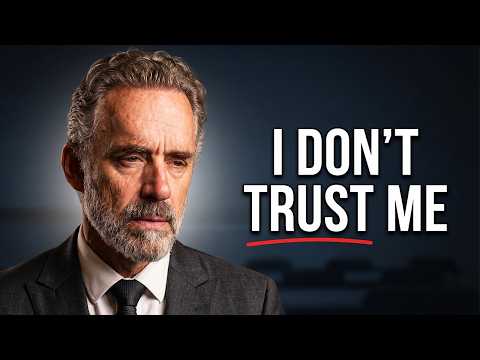
Jordan Peterson: "When You Don't Trust Yourself"
Jordan Peterson explores how to distinguish authentic thoughts from borrowed opinions by monitoring bodily sensations of weakness versus strength, arguing that confronting one's darkest potential reveals the greatest capacity for good, and that self-betrayal through inauthenticity represents the gravest moral failure.