Jordan Peterson: "Don't Assume You're A Good Person"
TL;DR
Jordan Peterson argues that assuming inherent goodness is dangerous; true character requires integrating your 'shadow' or capacity for harm, voluntarily confronting your deepest fears to build genuine courage rather than naivety, and recognizing that limitations and cultural constraints are preconditions for meaning.
🐉 Integrating the Shadow 2 insights
Develop teeth to gain self-respect
You cannot respect yourself until you integrate your 'monster' or capacity for cruelty, recognizing that being dangerous yet controlled is superior to being merely weak and naive.
Perpetrators are just like you
Understanding that you share the same psychological architecture as Nazi or Soviet perpetrators—what Jung called the shadow reaching 'all the way to hell'—is essential to prevent atrocities.
⚔️ The Architecture of Courage 3 insights
Enter the forest at its darkest point
Drawing from the Holy Grail myth, Peterson explains that growth requires confronting exactly what you least want to face, as undeveloped potential resides precisely where you have refused to look.
Voluntary exposure builds bravery, not safety
Clinical research shows that facing fears voluntarily activates challenge-based psychophysiological systems, making you braver rather than less afraid, as you learn you can handle danger rather than denying its existence.
Move forward with eyes open
True courage requires moving into the unknown while fully conscious of your vulnerability and mortality, unlike naive recklessness which lacks awareness of potential harm.
🏰 Limitation, Culture, and Meaning 3 insights
Limitations create the plot of life
Using Superman's evolution from leaping buildings to juggling planets as an example, Peterson argues that constraints and flaws are necessary for narrative and meaning, as omnipotence eliminates the possibility of growth.
Culture is both tyrant and benefactor
He critiques the 'patriarchy' narrative as incomplete, noting that culture simultaneously constrains individuality and provides ancestral benefits, requiring gratitude for the 'wise king' alongside criticism of the 'evil tyrant'.
Earned self-esteem through observed courage
Genuine self-esteem arises not from affirmations but from witnessing yourself voluntarily confronting risks and acting courageously despite knowing the dangers involved.
Bottom Line
Stop assuming you are inherently good and instead voluntarily confront your capacity for harm and your deepest fears; genuine self-respect comes from knowing you are dangerous yet disciplined, and from choosing to face exactly what you least want to see.
More from Jordan Peterson
View all
Jordan Peterson: "When You Stop Reacting, Toxic People Lose Their Power"
Jordan Peterson debunks the stereotype of the socially awkward genius, arguing that general cognitive ability positively correlates with social skills because reading people is cognitively demanding. He asserts that 'emotional intelligence' is actually the Big Five trait of agreeableness, and emphasizes that merit-based sorting by cognitive ability—while difficult for those excluded—maximizes societal benefit from high-capability individuals.

Jordan Peterson: "When You Stop Needing Approval, You Become Dangerous"
Jordan Peterson argues that meaningful personal transformation comes through humble, incremental self-improvement compounded over time, while warning that modern universities have abandoned education for postmodern indoctrination that reduces all human motivation to power and fractures society into competing identity groups.

Jordan Peterson: "Recognize Your Shadow Self"
Jordan Peterson argues that unresolved personal issues (the 'shadow self') trigger chronic stress responses that manifest as physical and mental illness, while totalitarian ideologies emerge when rational minds attempt to replace transcendent values with all-encompassing systems; the only path through inherent suffering is radical truth-telling and moral responsibility.
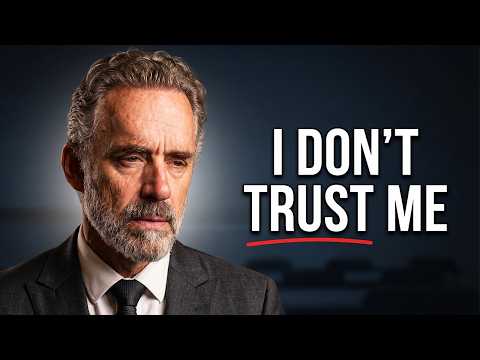
Jordan Peterson: "When You Don't Trust Yourself"
Jordan Peterson explores how to distinguish authentic thoughts from borrowed opinions by monitoring bodily sensations of weakness versus strength, arguing that confronting one's darkest potential reveals the greatest capacity for good, and that self-betrayal through inauthenticity represents the gravest moral failure.