Jake Paul on Going From YouTube to Boxing to Investing | a16z ft. Anti Fund
TL;DR
Jake Paul and Anti Fund co-founder Geoffrey Woo announce their oversubscribed $100 million growth fund backed by tier-one LPs like Andreessen Horowitz, while explaining how Paul's resilience and analytical operator mindset translate from entertainment to backing frontier tech companies.
💰 The $100M Fund & Portfolio 2 insights
Oversubscribed growth fund backed by industry legends
Anti Fund officially closed a $100 million growth fund with limited partners including Marc Andreessen, Chris Dixon, and other tier-one names from the a16z network.
Portfolio targets elite frontier tech companies
The fund has already deployed capital into SpaceX, OpenAI, Anthropic, Anduril, Etched, Cognition, Saronic, and Modal.
🤝 The Partnership Dynamic 2 insights
Early rejection built long-term trust
Geoffrey Woo passed on investing in Paul's first company at age 18, correctly predicting its failure, which established the judgment and honesty that defines their current partnership.
Complementary skills bridge culture and code
Paul brings cultural taste-making and presidential-level resilience, while Woo contributes Stanford computer science expertise and deep technical networks.
🧠 Analytical Resilience 2 insights
Experimental approach to career building
Paul treats ventures as data-driven experiments, doubling down on winners like boxing after achieving 1 million pay-per-view buys while ruthlessly cutting losses on failed projects.
Pain tolerance as competitive advantage
Having survived extreme public scrutiny since high school and toxic internet trolling, Paul views resilience as the essential trait for enduring the founder journey.
Bottom Line
Treat every venture as a data-driven experiment where you double down on traction and develop ironclad resilience to survive public scrutiny and failure.
More from a16z Podcast
View all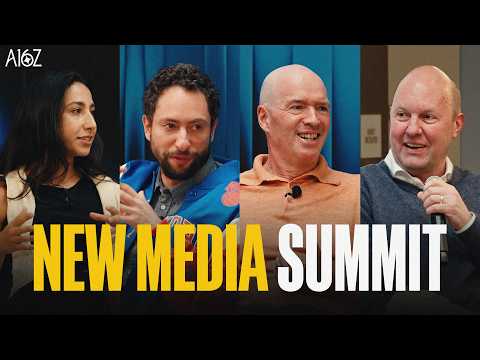
The Media Game Has Changed
The media landscape has shifted from defense-oriented legacy outlets demanding plastic, controversy-free performances to an offense-driven ecosystem where authenticity and founder-led personal brands dominate; success now requires treating public conversations like private ones and building direct channels rather than relying on traditional press.

Why AI Feels Like the Internet in 1997 | Benedict Evans on a16z
Benedict Evans compares today's AI landscape to the internet in 1997, arguing that agentic coding has emerged as the first true product-market fit use case while the industry grapples with severe infrastructure scarcity and an uncertain future where foundation models risk becoming commoditized infrastructure rather than value-capturing platforms.

The Rule for Picking AI Winners | The a16z Show
Frontier AI model companies are achieving hyperscaler-scale revenue growth with less than 5% economic diffusion, creating extraordinary value creation potential, yet rapid technological shifts and uncertain market structures make predicting ultimate winners increasingly difficult compared to prior tech cycles.

Private Markets and The Future of Capital Allocation with Marc Rowan | The a16z Show
Marc Rowan, CEO of Apollo Global Management, argues that extreme concentration in public markets has made private markets essential for diversification, detailing how Apollo evolved from a Drexel offshoot into a $1 trillion retirement services giant bridging the gap between infrastructure borrowers and income-seeking retirees.