I Trained With U.S. Green Berets Prepping for War With Russia | WSJ
TL;DR
As NATO pivots from counter-terrorism to Arctic defense, US Green Berets undergo brutal cold-weather training in Scandinavia to prepare for potential conflict with Russia, revealing that survival itself—not combat—is the primary challenge in extreme subzero warfare.
🌍 Geopolitical Shift in the High North 2 insights
NATO's strategic pivot to Arctic warfare
After two decades focused on Middle East counter-terrorism, NATO forces are redirecting resources to the High North to counter Russia's decades-long military expansion and control of strategic resources and shipping routes.
Post-Ukraine invasion scenarios
Western military planners fear that following the Ukraine conflict, Russia could target Finland, which would immediately draw Sweden and NATO forces into Arctic combat operations requiring rapid deployment to Scandinavia.
❄️ The Environment as Primary Enemy 3 insights
Extreme cold casualties exceed 10%
Training courses report severe injury rates with multiple soldiers hospitalized for frostbite, including one case risking toe amputation from frozen sweaty socks, forcing instructors to accept medium-risk protocols as necessary for realistic preparation.
Cold water immersion survival windows
Soldiers train to survive falling through ice by immediately stripping wet clothing and generating body heat through movement, as hypothermia can set in within minutes and the window for survival is extremely short.
Hypothermia risks during routine operations
Instructors emphasize that even minor casualties or moisture in uniforms can accelerate hypothermia dramatically, requiring constant vigilance, immediate layering during breaks, and skin-to-skin warming techniques to maintain core temperature.
🔧 Arctic Tactical Adaptations 2 insights
Weapon modifications for subzero operations
Standard firearms require taping metal components to prevent frostbite on contact, while frozen barrels must be thawed before firing to prevent catastrophic explosions, rendering weapons useless during extended outdoor missions.
Infrastructure and distance challenges
Vast Arctic distances with minimal infrastructure force soldiers to master extended solo survival, building insulated shelters and maintaining body heat for days without resupply, making simple logistics a combat-critical skill.
⚔️ Training vs. Combat Reality 1 insight
Survival supersedes combat readiness
Despite being elite special forces, participants currently lack capacity to wage actual war because survival demands consume all physical and mental resources, indicating NATO is years away from true Arctic combat readiness.
Bottom Line
Western militaries must immediately prioritize extreme cold-weather survival capabilities and Arctic-specific equipment, as tactical superiority becomes irrelevant if soldiers cannot operate weapons or survive the environment itself.
More from Wall Street Journal
View all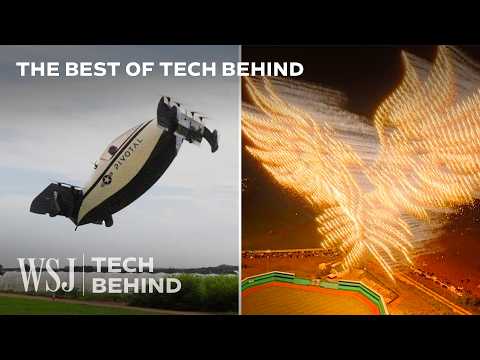
How IMAX, Flying Cars, Pyro Drone Shows and More Work | WSJ Tech Behind
From immersive sports domes using custom 8K optics to single-seat electric aircraft and transformable stadiums, advanced engineering is creating new categories of premium experiences that blur the line between physical and digital attendance while maximizing infrastructure utilization.

Breaking Down Iran’s Shahed Drones, China’s Invasion Barge and More | WSJ Equipped
The video analyzes three transformative military technologies: Lockheed Martin's F-35 collaborative combat aircraft integration, Blue Halo's cost-effective laser counter-drone systems, and China's new amphibious invasion barges designed to enable port-free assaults.

Watch Live: Hegseth Holds Press Conference at Central Command Headquarters | WSJ
Secretary of Defense Pete Hegseth and CENTCOM Commander Admiral Brad Cooper detailed significant U.S. military gains against Iran during Operation Epic Fury, emphasizing sustained air and naval dominance, the destruction of over 30 Iranian vessels, and a 90% reduction in enemy missile attacks while reaffirming unwavering commitment to complete mission objectives.

Watch: Trump's Full Response to Supreme Court’s Tariff Decision | WSJ
President Trump sharply criticized the Supreme Court's decision blocking his use of the International Emergency Economic Powers Act (AIPA) to impose tariffs, while paradoxically claiming the ruling confirms broader presidential authority under alternative trade statutes, and announced immediate implementation of a 10% global tariff under Section 122 authority.