Why rich societies became prosperous and anxious
TL;DR
Despite unprecedented material prosperity in developed societies, deep anxiety persists because we have abandoned the communal beliefs and collective purpose necessary for human flourishing, replacing them with narrow individualism and utility maximization.
😰 The Prosperity-Anxiety Paradox 2 insights
Material progress without happiness
Developed societies enjoy better health, safety, and wealth than ever before, yet experience widespread unhappiness and anxiety despite these objective improvements.
Negativity bias dominates
Humans tend to fixate on threats like climate change and inequality rather than appreciating the achievements that created current prosperity.
🧠 Belief as Cultural Infrastructure 3 insights
Humans are cultural creatures first
We evolved to cooperate through shared beliefs and social interaction, not merely to maximize individual utility as economic models assume.
Collective belief drives economic outcomes
Shared faith in progress and purpose determines institutional effectiveness and GDP growth more than rational calculation alone.
Identity requires shared mission
Individual wellbeing depends on feeling part of a collective endeavor larger than oneself, linking personal identity to group outcomes.
🏚️ Erosion of Collective Purpose 3 insights
Economics legitimized selfishness
The profession's focus on utility maximization—amplified by Chicago School evangelists like Milton Friedman—replaced collective good with permission to pursue pure self-interest.
Technology accelerates isolation
Smartphones and social media enable physical withdrawal from community, eroding the face-to-face interactions essential for human satisfaction.
Extreme ideologies fill the vacuum
As traditional communal beliefs erode, polarizing movements from MAGA to the "manosphere" rush in to provide the belonging and identity humans crave.
🚀 Reclaiming a Progress Narrative 3 insights
Rejecting degrowth pessimism
Environmental concerns have morphed into anti-development beliefs that lack faith in human ingenuity to solve climate challenges while continuing to advance.
Innovation isn't exhausted
The belief that we've run out of big ideas reflects dangerous complacency rather than actual technological limits, comparing unfavorably to the 1870-1970 period.
Redefining societal mission
Societies need shared narratives focused on long-term progress, understanding the universe, and mutual care rather than zero-sum competition over static resources.
Bottom Line
Rebuilding societal wellbeing requires rejecting purely individualistic economic models and intentionally cultivating shared beliefs in human progress and collective purpose.
More from Reuters
View all
LIVE: UK's Andy Burnham delivers speech on economy
Andy Burnham outlines a vision to fix Britain's broken economy by dismantling Westminster's centralized power structure, proposing a 'Number 10 North' based in Manchester to devolve resources and decision-making to UK regions for bottom-up growth.

LIVE: Bomb-sniffing dogs graduate in time for World Cup security
ATF Class 157 graduates six new K9 handler teams after 24 weeks of intensive training, preparing them for immediate deployment to FIFA World Cup venues and violent crime evidence recovery operations across the United States.
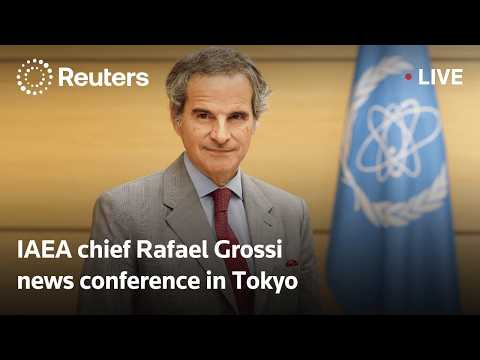
LIVE: IAEA chief Rafael Grossi holds news conference in Tokyo
IAEA Director General Rafael Grossi confirmed that over 160,000 tons of treated water from Fukushima have been safely discharged with radionuclide levels below expectations, while outlining ongoing challenges in verifying Iran's nuclear program under a new US-Iran memorandum amid contradictory political statements.

LIVE: NATO's Rutte speaks in Washington, D.C., ahead of Ankara summit
NATO Secretary General Mark Rutte outlined a transformative vision for 'NATO 3.0' featuring unprecedented European defense spending increases totaling 1.2 trillion dollars and a transatlantic defense industrial revolution. He credited President Trump's leadership for finally achieving allied burden-sharing while emphasizing enduring support for Ukraine and the strategic interdependence of US-European security.