‘Roaring’ Inflation To Force Rate Hikes; This Explodes Next | Steve Hanke
TL;DR
Economist Steve Hanke argues that with inflation running at 4.2%—more than double the Fed's 2% target—the central bank will likely be forced into multiple rate hikes by year-end despite recent hesitation, as accelerating money supply growth driven by commercial bank lending continues to fuel price pressures regardless of Federal Reserve policy statements.
📊 FOMC Decision & Market Reaction 3 insights
Markets fully priced in no rate change
Fed funds futures showed a 99.6% probability of no change the day before the meeting, making the hold decision completely anticipated by markets.
Warsh avoided divisive first meeting
Raising rates would have created a split FOMC vote, undermining the new chair's leadership and causing internal discord at his first public announcement.
Rate hike expectations surged post-meeting
Following the press conference, markets repriced to an 85% probability of at least one hike by December and a 30% chance for the July meeting.
💸 Inflation & Money Supply Mechanics 3 insights
Inflation running double the target
Current inflation at 4.2% significantly exceeds the 2% target, making the 'inflation genie' difficult to contain without significant tightening.
Commercial banks drive money creation
Approximately 80% of money supply growth originates from commercial bank loans rather than Federal Reserve actions, making bank regulations the primary monetary policy lever.
Money supply accelerating for 18 months
Bank lending has grown rapidly due to high profitability, increasing capital reserves and capacity to extend credit across the economy.
🏛️ The Regulatory Blind Spot 3 insights
Fed ignores bank regulation impact
While debating interest rates, policymakers overlook that loosening bank regulations would increase commercial banks' capacity to lend and expand the money supply.
Competing policy forces create dilemma
The Fed faces a contradiction between raising rates to fight inflation while simultaneously considering regulatory changes that would loosen monetary conditions.
Task forces lack external expertise
Warsh established five internal task forces to review operations but excluded outside monetarist economists, limiting the scope of potential policy innovation.
🎯 Warsh's Monetary Philosophy 2 insights
'Monetarist light' versus Volcker
Unlike Paul Volcker who explicitly embraced the quantity theory of money (MV=PY), Warsh merely exhibits monetarist tendencies without fully committing to the framework.
Historical opposition to QE
During his 2006-2011 tenure as governor, Warsh publicly opposed Bernanke's quantitative easing, signaling skepticism about balance sheet expansion and money supply growth.
Bottom Line
The Federal Reserve cannot control inflation through interest rates alone while simultaneously loosening bank regulations that drive 80% of money supply growth, meaning inflation will likely persist until policymakers address commercial bank lending capacity or accept significantly higher rates.
More from The David Lin Report
View all
The Next Asset To 3x Is Driven By Insane Supply Shock | Ian Harris
Copper Giant CEO Ian Harris argues copper is becoming 'the new oil' as AI data centers drive unprecedented demand, creating a structural supply deficit while governments secretly stockpile strategic reserves, positioning copper equities for a major market rotation away from gold and tech stocks.
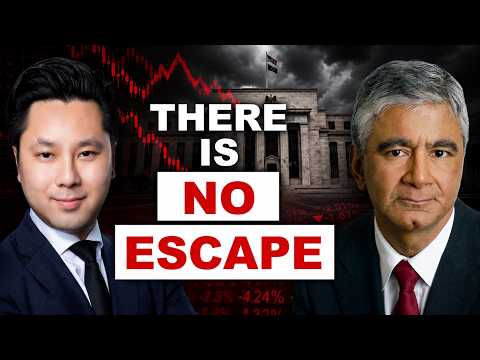
New Fed Chair Drops Bombshell, Tanks Markets; ‘No Escape’ From Coming Disaster | Komal Sri Kumar
New Federal Reserve Chair Kevin Warsh's inaugural FOMC meeting eliminated forward guidance and reaffirmed the 2% inflation target, triggering market turmoil as the dot plot revealed nine of nineteen committee members expect rate hikes by year-end despite President Trump's calls for cuts.

Is Gold About To Crash 50%? 2012 Repeat Pattern Explained | Gary Wagner
Gold has corrected 20% from its highs to around $4,300, sparking fears of a 2012-style 50% crash, but technical analyst Gary Wagner argues that unprecedented central bank buying and shifting macro conditions provide fundamental support absent in previous bear markets.

The Next Resource Crisis Could Be Bigger Than Oil | Chris Batalha
Chris Batalha outlines why the global shift to green steel is creating a critical shortage of high-purity iron ore, a resource only available at scale in Brazil and Quebec, while highlighting how Oceanic Iron Ore's Quebec project eliminates typical rail costs by sitting just 25 kilometers from port.