LIVE: White House briefing with Karoline Leavitt
TL;DR
White House Press Secretary Karoline Leavitt detailed the progress of Operation Epic Fury against Iran, citing the destruction of over 11,000 targets and 90% reduction in Iranian attacks, while defending emergency measures to pay TSA workers amid a Democrat-led DHS funding shutdown and addressing economic pressures from the conflict.
⚔️ Operation Epic Fury Military Progress 3 insights
Iranian military capabilities decimated
U.S. forces have struck over 11,000 enemy targets, destroying more than 150 Iranian naval vessels (including 92% of their largest) and damaging 70% of missile, drone, and naval production facilities.
Attack reduction and air dominance
Iran's ballistic missile and drone attacks are down roughly 90%, while U.S. and Israeli forces have completed over 11,000 combat flights achieving air dominance over the region.
Negotiation pause with military backup
President Trump issued a 10-day pause on strikes against Iranian power plants to pursue diplomacy, but warned the military stands ready with 'every option available' if Iran rejects the deal.
🛃 DHS Funding Crisis & Emergency Measures 3 insights
TSA operational collapse
Over six weeks of unfunded operations led to 500 TSA officer resignations, mass sickouts, and security wait times exceeding three hours, creating 'unacceptable heightened security risk.'
Presidential memorandum on pay
Trump signed a directive to use available DHS funds to pay TSA workers immediately, though permanent funding requires Congress to return and pass appropriations.
Immigration enforcement stance unchanged
Leavitt affirmed deportation priorities remain focused on 'the worst of the worst' illegal alien criminals, citing the murder of Sheridan Gorman by a Venezuelan national as justification for strict enforcement.
🌍 Economic & Diplomatic Developments 3 insights
Energy market stabilization efforts
To address diesel prices averaging $5.38/gallon, the administration released strategic petroleum reserves, issued 60-day Jones Act waivers, and expanded political risk insurance for oil purchases.
Strait of Hormuz traffic resuming
Twenty additional tankers are expected to transit the strait following U.S.-Iran talks, though the administration rejected any Iranian toll system or 'cherry-picking' of vessels.
China trip preparations
Cabinet officials including Treasury Secretary Bessent and USTR Jamieson Greer are expected to travel to China for working-level meetings ahead of President Trump's visit.
Bottom Line
The administration is pursuing a dual-track strategy of overwhelming military force to degrade Iran's capabilities while maintaining diplomatic channels for a nuclear deal, even as it manages domestic economic pressures and a funding crisis at the Department of Homeland Security.
More from Reuters
View all
LIVE: UK's Andy Burnham delivers speech on economy
Andy Burnham outlines a vision to fix Britain's broken economy by dismantling Westminster's centralized power structure, proposing a 'Number 10 North' based in Manchester to devolve resources and decision-making to UK regions for bottom-up growth.

LIVE: Bomb-sniffing dogs graduate in time for World Cup security
ATF Class 157 graduates six new K9 handler teams after 24 weeks of intensive training, preparing them for immediate deployment to FIFA World Cup venues and violent crime evidence recovery operations across the United States.
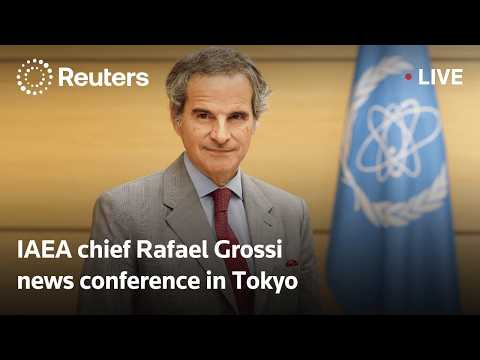
LIVE: IAEA chief Rafael Grossi holds news conference in Tokyo
IAEA Director General Rafael Grossi confirmed that over 160,000 tons of treated water from Fukushima have been safely discharged with radionuclide levels below expectations, while outlining ongoing challenges in verifying Iran's nuclear program under a new US-Iran memorandum amid contradictory political statements.

LIVE: NATO's Rutte speaks in Washington, D.C., ahead of Ankara summit
NATO Secretary General Mark Rutte outlined a transformative vision for 'NATO 3.0' featuring unprecedented European defense spending increases totaling 1.2 trillion dollars and a transatlantic defense industrial revolution. He credited President Trump's leadership for finally achieving allied burden-sharing while emphasizing enduring support for Ukraine and the strategic interdependence of US-European security.