LIVE: US Central Command chief testifies before Senate panel
TL;DR
US military commanders defended Operation Epic Fury's success in degrading Iranian military capabilities before the Senate, while lawmakers clashed over the historical roots of US-Iran hostility, the consequences of abandoning the JCPOA nuclear deal, and the administration's refusal to share legal justifications for the war.
📜 Iran Policy Debate and Legal Accountability 3 insights
Historical US interventions fueled current hostility
Senator Murphy traced decades of Iranian animosity to the 1953 CIA coup and US support for the Shah's dictatorship, arguing that ignoring this history explains why military solutions have failed since 1953.
JCPOA withdrawal created current nuclear threat
When the US abandoned the Iran nuclear deal in 2018, Iran possessed zero highly enriched uranium, compared to 400kg today, demonstrating that abandoning diplomacy made the current conflict inevitable.
Administration withholding war legal rationale
The Department of Justice refused to provide the Armed Services Committee with the classified OLC legal opinion justifying the war, blocking congressional oversight of the $1.5 trillion defense budget.
⚔️ Operation Epic Fury Military Assessment 3 insights
Iran conducted 350 pre-operation attacks
Admiral Cooper testified that Iran and its proxies attacked US forces approximately every third day for 30 months prior to February 28, totaling 350 attacks on service members and diplomats.
Ballistic missile production escalated dramatically
Intelligence showed Iran increased ballistic missile production capability between November and December, presenting an undefendable threat to regional partners that justified immediate military action.
Military objectives achieved
CENTCOM confirmed Operation Epic Fury eliminated Iran's navy and virtually destroyed its large-scale ballistic missile production infrastructure, meeting all stated military goals.
🌍 Africa Terrorism and Strategic Gaps 3 insights
USAID cuts ceded influence to China and Russia
General Anderson acknowledged that significantly reduced aid programs have created a soft power vacuum in Africa that adversaries are actively exploiting to expand their influence.
Sahel becoming terrorism epicenter
Al-Qaeda and ISIS have resurged in the Sahel with both the will and intent to attack the US homeland, creating an intelligence 'black hole' due to limited surveillance capacity.
Intelligence gaps limit threat detection
AFRICOM lacks sufficient ISR assets to detect when terrorist groups develop attack capabilities and relies on emerging technologies and partner nations to monitor the region.
Bottom Line
While military leaders claim successful degradation of Iran's conventional threats through Operation Epic Fury, the hearing exposed critical long-term security risks from abandoned diplomatic channels, eroded congressional oversight, and reduced soft power in Africa that may fuel future terrorist capabilities.
More from Reuters
View all
LIVE: UK's Andy Burnham delivers speech on economy
Andy Burnham outlines a vision to fix Britain's broken economy by dismantling Westminster's centralized power structure, proposing a 'Number 10 North' based in Manchester to devolve resources and decision-making to UK regions for bottom-up growth.

LIVE: Bomb-sniffing dogs graduate in time for World Cup security
ATF Class 157 graduates six new K9 handler teams after 24 weeks of intensive training, preparing them for immediate deployment to FIFA World Cup venues and violent crime evidence recovery operations across the United States.
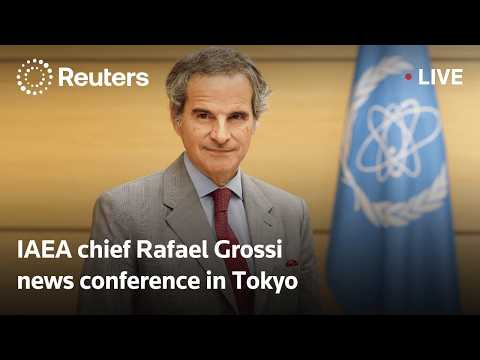
LIVE: IAEA chief Rafael Grossi holds news conference in Tokyo
IAEA Director General Rafael Grossi confirmed that over 160,000 tons of treated water from Fukushima have been safely discharged with radionuclide levels below expectations, while outlining ongoing challenges in verifying Iran's nuclear program under a new US-Iran memorandum amid contradictory political statements.

LIVE: NATO's Rutte speaks in Washington, D.C., ahead of Ankara summit
NATO Secretary General Mark Rutte outlined a transformative vision for 'NATO 3.0' featuring unprecedented European defense spending increases totaling 1.2 trillion dollars and a transatlantic defense industrial revolution. He credited President Trump's leadership for finally achieving allied burden-sharing while emphasizing enduring support for Ukraine and the strategic interdependence of US-European security.