LIVE: UNHRC holds debate over fatal school strike in Iran
TL;DR
The UN Human Rights Council convened an urgent debate following a US missile strike on Shajarat Hayaba Elementary School in Minab, Iran, that killed approximately 175 children and teachers. UN officials condemned the attack as a grave violation of international law and potential war crime, demanding transparent accountability while reporting that attacks on schools globally surged 44% in 2024.
🎯 The Minab School Attack and Preliminary Findings 3 insights
US forces confirmed responsible for precision strike
Preliminary US military investigations confirmed American forces launched Tomahawk missiles at the elementary school on February 28 at 10:45 a.m. local time, striking individual buildings with precision munitions while classes were underway.
Outdated intelligence cited as cause of targeting failure
Ongoing investigations suggest the attack resulted from mistaken targeting using outdated intelligence, violating the obligation to verify targets are military objectives rather than civilian objects—a failure that open-source journalists quickly identified.
Catastrophic child casualties and national damage
The strike killed approximately 175 people, mostly children aged 7-12, while broader hostilities have damaged over 600 schools nationwide, killed more than 1,900 civilians, and displaced 3 million people across Iran's 31 provinces.
⚖️ International Law Violations and Accountability 3 insights
Attack constitutes grave breach of international humanitarian law
Schools are protected civilian objects under the Convention on the Rights of the Child and Geneva Conventions; intentional attacks on educational facilities not serving military purposes constitute war crimes under Rome Statute Article 8.
Command responsibility and liability questions raised
The Special Rapporteur demanded answers regarding who in the US chain of command failed to verify data, why outdated intelligence was used, and what criminal liability commanders will face under domestic and international law.
State responsibility requires reparations and rehabilitation
Beyond criminal accountability, the attacking state bears responsibility for reparations including rebuilding schools, trauma-informed education, and psychosocial support for survivors, with education itself serving as a form of reparation for war-affected children.
🌍 Regional Escalation and Human Rights Crisis 3 insights
Strike occurred during active diplomatic negotiations
Iran's Foreign Minister emphasized the attack came on February 28 while Iran and the US were engaged in nuclear negotiations, representing the second betrayal of diplomacy in nine months and a strategic failure of force over dialogue.
Pattern of attacks on critical civilian infrastructure
Beyond schools, US and Israeli strikes have targeted hospitals, residential areas, nuclear facilities, and energy installations across all 31 Iranian provinces, risking serious long-term health effects and raising concerns about compliance with distinction principles.
Iranian domestic crackdown concurrent with conflict
The High Commissioner reported Iranian authorities have intensified repression during hostilities, shutting down internet access for nearly a month, arresting hundreds for filming damage or communicating about the conflict, and treating dissent as enemy collaboration.
Bottom Line
All parties must immediately cease military operations, return to diplomatic negotiations, and ensure transparent, independent criminal investigations into the Minab school attack to establish command responsibility and provide justice
More from Reuters
View all
LIVE: UK's Andy Burnham delivers speech on economy
Andy Burnham outlines a vision to fix Britain's broken economy by dismantling Westminster's centralized power structure, proposing a 'Number 10 North' based in Manchester to devolve resources and decision-making to UK regions for bottom-up growth.

LIVE: Bomb-sniffing dogs graduate in time for World Cup security
ATF Class 157 graduates six new K9 handler teams after 24 weeks of intensive training, preparing them for immediate deployment to FIFA World Cup venues and violent crime evidence recovery operations across the United States.
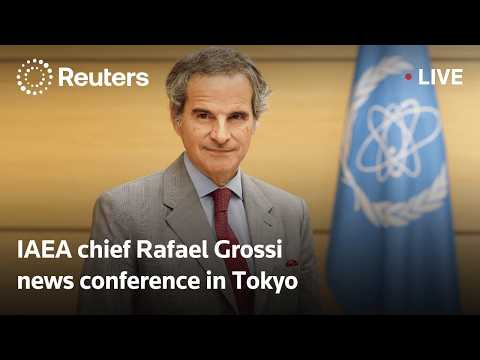
LIVE: IAEA chief Rafael Grossi holds news conference in Tokyo
IAEA Director General Rafael Grossi confirmed that over 160,000 tons of treated water from Fukushima have been safely discharged with radionuclide levels below expectations, while outlining ongoing challenges in verifying Iran's nuclear program under a new US-Iran memorandum amid contradictory political statements.

LIVE: NATO's Rutte speaks in Washington, D.C., ahead of Ankara summit
NATO Secretary General Mark Rutte outlined a transformative vision for 'NATO 3.0' featuring unprecedented European defense spending increases totaling 1.2 trillion dollars and a transatlantic defense industrial revolution. He credited President Trump's leadership for finally achieving allied burden-sharing while emphasizing enduring support for Ukraine and the strategic interdependence of US-European security.