LIVE: UN Human Rights Council meeting
TL;DR
UN High Commissioner Volker Türk warns that global armed conflicts have doubled since 2010 while attacks on civilians rise by one-third, describing a world where authoritarian regimes deploy a common playbook to crush dissent and powerful states dismantle international law, leaving human rights protections in severe crisis.
🌍 Global Conflict Crisis & Breakdown of International Law 4 insights
Armed conflicts double since 2010
The number of active armed conflicts has risen to approximately 60, while attacks on civilians have increased by nearly one-third, making the world "a more dangerous place."
Healthcare under systematic attack
Warring parties now target healthcare facilities an average of 10 times per day, exploiting legal ambiguities to justify strikes that would have triggered global outcry just a decade ago.
Nuclear arms race escalation
The High Commissioner expressed deep concern that no binding treaty limits currently exist on the nuclear arsenals of the United States and Russia, calling for immediate negotiation of a New START successor.
Specific crisis zones highlighted
Turk detailed violations in Sudan (advanced weapons in residential areas), Ukraine (civilian infrastructure destruction), occupied Palestinian territory (annexation project), and Myanmar (military suppression of democracy).
🏛️ The Authoritarian Playbook 4 insights
Common tactics to crush dissent
Authoritarian governments follow a familiar pattern: adopting vague national security laws, criminalizing peaceful criticism, capturing judicial institutions, branding civil society as foreign agents, and scapegoating women and minorities.
Iran's lethal crackdown continues
Following thousands killed in January protests, at least eight people including two children have been sentenced to death, with another 30 reportedly at risk of execution.
Militarized law enforcement trends
Turk cited concerning developments including El Salvador's four-year state of emergency with mass trials, hundreds of deaths in Ecuadorian prisons, and excessive force by U.S. immigration agents against migrants and protesters.
Attacks on international institutions
Political leaders are attacking the UN, International Court of Justice, and International Criminal Court instead of addressing real security challenges.
🎤 Civic Space and Press Freedom Under Siege 3 insights
Journalists facing unprecedented danger
Over the past three and a half years, 310 journalists were killed worldwide and 85% of these cases remain unpunished, with women journalists particularly exposed to online violence.
Global restrictions on civil society
Activists face prosecution under counterterrorism legislation in Belarus, Egypt, India, Russia, Tunisia, and Turkey, while authorities in Pakistan jail lawyers for social media posts.
China's intensified repression
The High Commissioner urged China to stop using vague criminal provisions to suppress rights, release arbitrarily detained persons, and address lack of follow-up on recommendations regarding Uyghurs, Tibetans, and Protestant communities.
⚖️ Gender Apartheid and Economic Injustice 3 insights
Afghanistan's gender apartheid
The system of segregation imposed on Afghan women was described as "reminiscent of apartheid" based on gender rather than race.
Global femicide emergency
Approximately 50,000 women and girls were killed worldwide in 2024, most by family members, while women politicians face constant misogyny and online hate.
Development aid cuts threaten millions
Drastic reductions in international aid are projected to cause more than 22 million avoidable deaths by 2030, even as one in four people globally already face food insecurity.
Bottom Line
States must immediately ban weapons transfers where there is a risk of international law violations, enforce accountability through universal jurisdiction and credible prosecutions, and defend civic space to prevent the complete collapse of the international human rights framework.
More from Reuters
View all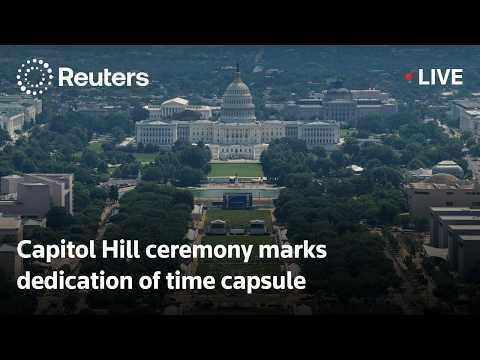
LIVE: Capitol Hill ceremony marks the dedication of time capsule
Congressional leaders gathered to dedicate a time capsule that will be sealed by the 119th Congress and opened in 2276 by the 244th Congress, containing artifacts from every state to commemorate America's 250th anniversary and convey current values to future generations.

What happens when the Federal Reserve goes quiet? | Econ World
New Federal Reserve Chair Kevin Walsh is spearheading a "silent revolution" by eliminating forward guidance and shortening statements to reduce market dependency on Fed signaling, sparking debate over whether less communication enhances or undermines central bank effectiveness during normal economic times.

LIVE: Outgoing British PM Keir Starmer takes questions in parliament
Outgoing Labour Prime Minister Keir Starmer defends his government's record on NHS investment, economic growth, and defense spending while facing sharp criticism from opposition leaders over his resignation and cabinet performance during his final parliamentary questioning session.

LIVE: US World Cup players speak from California base camp
US Men's National Team players highlight their tight-knit chemistry and competitive training culture as drivers of World Cup success, while discussing professional sacrifices, the importance of momentum, and the unique motivation of representing their home country on the West Coast.