LIVE: UK Prime Minister Keir Starmer addresses war in Iran
TL;DR
UK Prime Minister Keir Starmer detailed a defensive military response to Iran's regional attacks, confirming that while Britain declined to join initial US-Israeli offensive strikes, it pre-deployed air and naval assets in January to protect 140,000 British nationals and has begun a large-scale evacuation.
🛡️ Military Deployment & Defensive Operations 4 insights
Pre-conflict deployment began in January
The UK moved fighter jets, air defense missiles, and advanced radar to Cyprus and Qatar during January and February, ensuring heightened readiness before hostilities began.
British jets actively intercepting Iranian drones
Typhoon jets shot down multiple drones heading toward British military bases and allies, with four additional jets deploying to Qatar and Wildcat helicopters arriving in Cyprus.
US granted base access for defensive strikes
The UK approved US use of British bases to conduct defensive operations targeting Iranian missiles before launch, though London refused participation in offensive strikes on Iran.
Naval assets reinforcing Mediterranean presence
HMS Dragon is deploying to the Mediterranean to strengthen defensive operations alongside existing air defense capabilities across the region.
✈️ Civilian Evacuation & Consular Response 3 insights
Largest evacuation operation since Afghanistan
Over 140,000 British nationals have registered their presence in the region, with officials describing the evacuation as significantly larger than the 2021 Afghanistan withdrawal.
Commercial and charter airlift underway
More than 4,000 people have returned on commercial flights from the UAE, with the first charter flight from Oman departing during the address and British Airways adding daily Oman-UK services.
Rapid deployment teams on the ground
Consular rapid deployment teams are operating in Oman and Saudi Arabia to assist vulnerable individuals, though airspace closures complicate repatriation efforts.
🌍 Strategic Decision-Making & Alliances 3 insights
Defensive focus maintained despite pressure
Starmer defended declining to join initial offensive strikes, stating the priority is protecting British lives, not offensive operations, though the configuration with US forces remains under review.
Cabinet decision timeline clarified
The Prime Minister stated no US request for base access arrived until Saturday afternoon, with the unanimous cabinet decision finalized Sunday evening, rejecting claims of Friday indecision involving Ed Miliband.
Special relationship remains operationally active
Despite public criticism from President Trump, Starmer confirmed 24/7 intelligence sharing and joint protection of bases continue, though each leader acts in their own national interest.
🏠 Domestic Security & Economic Impact 3 insights
Enhanced security for religious communities
The government is providing protective security to Jewish and Muslim places of worship across the UK to prevent societal division and ensure community safety.
Defense spending commitments defended
Starmer cited existing increases as the largest since the Cold War but offered no specific timeline for reaching 3% of GDP, stating only that the UK must go 'further and faster'.
Energy security buffers economic volatility
Long-term investments in clean energy and reduced dependence on international markets are intended to mitigate potential price shocks from Iran's targeting of Gulf oil facilities.
Bottom Line
The UK is prioritizing defensive military protection and large-scale civilian evacuation over offensive engagement, maintaining that the only sustainable resolution is a negotiated settlement on Iran's nuclear program while keeping options open for future operational changes.
More from Reuters
View all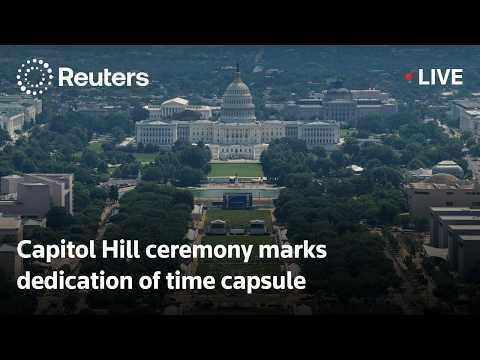
LIVE: Capitol Hill ceremony marks the dedication of time capsule
Congressional leaders gathered to dedicate a time capsule that will be sealed by the 119th Congress and opened in 2276 by the 244th Congress, containing artifacts from every state to commemorate America's 250th anniversary and convey current values to future generations.

What happens when the Federal Reserve goes quiet? | Econ World
New Federal Reserve Chair Kevin Walsh is spearheading a "silent revolution" by eliminating forward guidance and shortening statements to reduce market dependency on Fed signaling, sparking debate over whether less communication enhances or undermines central bank effectiveness during normal economic times.

LIVE: Outgoing British PM Keir Starmer takes questions in parliament
Outgoing Labour Prime Minister Keir Starmer defends his government's record on NHS investment, economic growth, and defense spending while facing sharp criticism from opposition leaders over his resignation and cabinet performance during his final parliamentary questioning session.

LIVE: US World Cup players speak from California base camp
US Men's National Team players highlight their tight-knit chemistry and competitive training culture as drivers of World Cup success, while discussing professional sacrifices, the importance of momentum, and the unique motivation of representing their home country on the West Coast.