LIVE: NATO chief Mark Rutte presents 2025 annual report
TL;DR
NATO Secretary General Mark Rutte presents the 2025 annual report, highlighting historic achievements including all allies meeting the 2% GDP defense spending target for the first time and a new 5% GDP commitment, while addressing ongoing threats from Russia, Iran, and the need for stronger defense production capabilities.
💰 Historic Defense Spending Milestones 3 insights
All NATO allies reach 2% GDP target
For the first time since the 2014 commitment, all 32 NATO members met the 2% of GDP defense spending goal in 2025.
Europe and Canada increase spending 20%
European allies and Canada boosted defense investment by 20% in 2025 compared to 2024, representing billions in additional funding.
New 5% GDP commitment approved
At The Hague summit, allies made a historic decision to raise defense investment to 5% of GDP, including 3.5% for core defense capabilities.
🛡️ Russia Threat Response 3 insights
Baltic and Eastern Sentry operations launched
NATO created Baltic Sentry to protect undersea infrastructure and Eastern Sentry after Russian drone violations over Poland, strengthening deterrence from the High North to Black Sea.
Ukraine support continues through PEARL program
The PEARL program has supplied 75% of Ukraine's Patriot missile ammunition and 90% of other air defense system ammunition since launch.
J-TECH center established in Poland
NATO opened its first joint NATO-Ukraine center in February 2025 to share lessons learned from the ongoing war.
🎯 Iran and Middle East Security 3 insights
NATO intercepts Iranian missiles targeting Turkey
The alliance successfully intercepted ballistic missiles heading to Turkey on three separate occasions, demonstrating collective defense capabilities.
30-country coalition for sea lane security
Over 30 countries, led by UK and France, have committed to ensuring Middle East shipping lanes remain open following Iranian threats.
Long-range Iranian missile capabilities confirmed
Iran's targeting of Diego Garcia base demonstrated missile reach of 4,000km, posing increased threat to NATO allies and interests.
🏭 Defense Production Challenges 3 insights
Ammunition production increased sixfold
NATO has successfully ramped up ammunition production six times compared to previous levels, though more capacity is still needed.
Defense industrial base insufficient
Current defense production capabilities across US, Canada, and Europe are not producing enough equipment fast enough to meet security demands.
Innovation integration through Century operations
Baltic and Eastern Sentry operations serve dual purposes of defense and testing new technologies including drone and counter-drone capabilities.
Bottom Line
NATO achieved unprecedented unity with all allies meeting defense spending targets for the first time, but must urgently scale up defense production to match the growing threat environment from Russia, Iran, and other adversaries.
More from Reuters
View all
LIVE: UK's Andy Burnham delivers speech on economy
Andy Burnham outlines a vision to fix Britain's broken economy by dismantling Westminster's centralized power structure, proposing a 'Number 10 North' based in Manchester to devolve resources and decision-making to UK regions for bottom-up growth.

LIVE: Bomb-sniffing dogs graduate in time for World Cup security
ATF Class 157 graduates six new K9 handler teams after 24 weeks of intensive training, preparing them for immediate deployment to FIFA World Cup venues and violent crime evidence recovery operations across the United States.
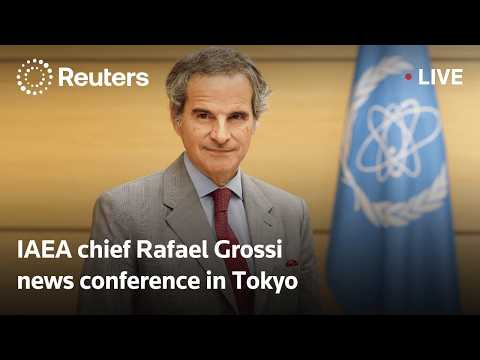
LIVE: IAEA chief Rafael Grossi holds news conference in Tokyo
IAEA Director General Rafael Grossi confirmed that over 160,000 tons of treated water from Fukushima have been safely discharged with radionuclide levels below expectations, while outlining ongoing challenges in verifying Iran's nuclear program under a new US-Iran memorandum amid contradictory political statements.

LIVE: NATO's Rutte speaks in Washington, D.C., ahead of Ankara summit
NATO Secretary General Mark Rutte outlined a transformative vision for 'NATO 3.0' featuring unprecedented European defense spending increases totaling 1.2 trillion dollars and a transatlantic defense industrial revolution. He credited President Trump's leadership for finally achieving allied burden-sharing while emphasizing enduring support for Ukraine and the strategic interdependence of US-European security.