LIVE: Jeffries speaks about War Powers Resolution on House floor
TL;DR
The House debates competing resolutions on Iran military action, with Republicans defending President Trump's Article II authority to conduct recent strikes while Democrats demand congressional authorization under the War Powers Resolution, exposing a constitutional clash over executive versus legislative war powers.
⚔️ Iran's History of Aggression 3 insights
47 years of state-sponsored terror
Rep. Mills emphasized Iran's 47-year war against America, citing the Beirut bombing, embassy attacks, and hostage takings as evidence of ongoing aggression.
Proxy network casualties
Rep. Fine stated Iran is responsible for 1,200 American deaths over 47 years, including 46 Americans killed by Hamas on October 7th.
Regional militia funding
Speakers detailed Iranian support for Houthis, Hezbollah, and Iraqi militias through illicit oil sales to China and drug trafficking operations.
🏛️ Constitutional Authority Debate 3 insights
Article II executive authority claimed
Rep. Mast argued Operation Epic Fury represents legal presidential authority to address imminent threats without congressional pre-authorization.
Congressional war powers demanded
Rep. Meeks insisted the Constitution grants only Congress power to declare war, noting the administration's war powers notification failed to mention 'imminent' threats.
Absence of deliberation cited
Democrats highlighted zero committee hearings, testimony, or pre-strike consultation occurred, unlike previous military authorizations for Afghanistan post-9/11.
📜 Legislative Maneuvering 3 insights
Symbolic resolution passes
House Resolution 1099 affirming Iran as the largest state sponsor of terror passed as Republicans framed opposition as forgetting terrorist victims.
War Powers Resolution challenged
House Concurrent Resolution 38 sought to direct troop withdrawal from unauthorized hostilities, with Democrats calling the first vote a 'stunt' to shadow this measure.
Partisan divisions on executive constraints
Republicans urged unified messaging against Iran while Democrats argued supporting terror designation must not override constitutional checks on unilateral presidential war-making.
Bottom Line
Congress remains divided over whether military strikes against Iran require explicit congressional authorization under the War Powers Resolution or fall within Article II authority, with immediate legislative action failing to resolve the constitutional impasse.
More from Reuters
View all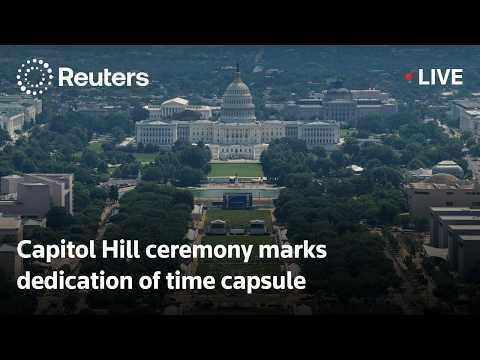
LIVE: Capitol Hill ceremony marks the dedication of time capsule
Congressional leaders gathered to dedicate a time capsule that will be sealed by the 119th Congress and opened in 2276 by the 244th Congress, containing artifacts from every state to commemorate America's 250th anniversary and convey current values to future generations.

What happens when the Federal Reserve goes quiet? | Econ World
New Federal Reserve Chair Kevin Walsh is spearheading a "silent revolution" by eliminating forward guidance and shortening statements to reduce market dependency on Fed signaling, sparking debate over whether less communication enhances or undermines central bank effectiveness during normal economic times.

LIVE: Outgoing British PM Keir Starmer takes questions in parliament
Outgoing Labour Prime Minister Keir Starmer defends his government's record on NHS investment, economic growth, and defense spending while facing sharp criticism from opposition leaders over his resignation and cabinet performance during his final parliamentary questioning session.

LIVE: US World Cup players speak from California base camp
US Men's National Team players highlight their tight-knit chemistry and competitive training culture as drivers of World Cup success, while discussing professional sacrifices, the importance of momentum, and the unique motivation of representing their home country on the West Coast.