LIVE: ICC hearing for Philippine ex-president Duterte
TL;DR
ICC prosecutors presented evidence alleging former Philippine President Rodrigo Duterte created and personally directed the 'Davao Death Squad' (DDS), requiring his approval for extrajudicial killings of poor civilians while funding hitmen through ghost city payrolls, citing his multiple recorded admissions and video evidence of him watching murder CCTV footage.
⚖️ Duterte's 'Necessary Evil' Philosophy 3 insights
Privileged background contradicts populist image
Despite portraying himself as understanding the poor, Duterte came from a wealthy family of lawyers and politicians and served as a prosecutor for nearly a decade (1977-1986).
Admitted teaching police to plant evidence
As a prosecutor, Duterte allegedly taught officers that evidence planting was a 'necessary evil' for the common good, later admitting under oath in 2024 that it was 'part of the strategy as a mayor.'
Cultivated 'tough guy' persona with weapons
Evidence included videos and photos of Duterte riding motorcycles while firing pistols (2007) and posing with assault rifles alongside future police chiefs to project an image of violent authority.
🏛️ ICC Arrest & Fitness to Stand 3 insights
Arrested March 2025 and transferred to The Hague
Duterte was arrested three days after a March 9, 2025 speech in Hong Kong where he dismissed the ICC as 'bullshit,' and was transferred to ICC custody shortly after.
Defense fitness claim rejected by medical experts
After his lawyers claimed he was unfit for proceedings, a panel of three medical experts appointed by the court unanimously found Duterte physically and mentally capable of standing trial.
Refused to appear despite medical clearance
The prosecutor noted that Duterte 'chose not to face the court' and 'doesn't want to be here,' despite having no medical reason preventing his attendance at the confirmation hearing.
🏴☠️ Davao Death Squad Structure 3 insights
Founded at celebratory 1988 hotel dinner
Witnesses testified Duterte formed the DDS at a festive meeting where he told new members their job was to 'kill the drug pushers, the snatchers, and the holdupers,' provided handguns from a basket, and sprayed champagne to celebrate.
Pyramidal command requiring top-down approval
The DDS operated through a hierarchical structure with Duterte at the apex, relaying orders through co-perpetrators (including Ronald dela Rosa and Christopher 'Bong' Go) to handlers and hitmen; witnesses confirmed 'you cannot just kill anyone... without Duterte's approval.'
Duterte's multiple admissions of leadership
He admitted in a 2015 interview 'I am the death squad,' repeated the confession under oath at a 2024 Senate hearing ('I really took care of it'), and confirmed his death squad was 'organized.'
💀 Systematic Operations & Funding 4 insights
Hitmen paid through city 'ghost employee' payroll
Duterte allegedly funded non-police hitmen by placing them as false employees on the Davao City Hall payroll, providing salaries, IDs, firearms, vehicles, and ammunition for their sole job of killing.
Financial rewards for murder
DDS members received reward money for killings, initially 10,000 pesos per kill, with one incident (Agdao Market, December 2013) paying 90,000 pesos total for the murders of three alleged thieves.
Targeted poor civilians including children
The prosecution emphasized that 'the poorest of the poor were his victims,' with 3 of the 19 victims in the charged incidents being children, and hitmen recruited from those indebted to Duterte to ensure control.
Video evidence of Duterte watching murders
Evidence includes YouTube footage showing Duterte in the CCTV control room watching live footage of the Agdao Market murders, where three DDS gunmen shot victims in broad daylight.
Bottom Line
Prosecutors allege Duterte operated a systematic, state-funded assassination network requiring his personal authorization for each murder, which he openly directed and admitted to before his arrest, targeting impoverished civilians under the guise of crime reduction.
More from Reuters
View all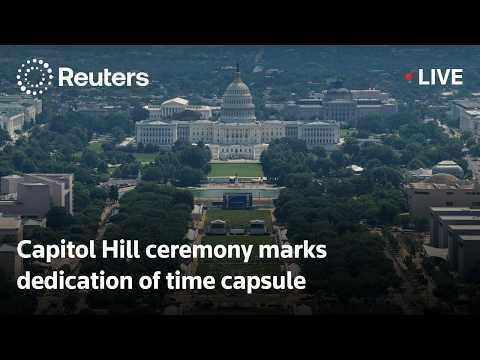
LIVE: Capitol Hill ceremony marks the dedication of time capsule
Congressional leaders gathered to dedicate a time capsule that will be sealed by the 119th Congress and opened in 2276 by the 244th Congress, containing artifacts from every state to commemorate America's 250th anniversary and convey current values to future generations.

What happens when the Federal Reserve goes quiet? | Econ World
New Federal Reserve Chair Kevin Walsh is spearheading a "silent revolution" by eliminating forward guidance and shortening statements to reduce market dependency on Fed signaling, sparking debate over whether less communication enhances or undermines central bank effectiveness during normal economic times.

LIVE: Outgoing British PM Keir Starmer takes questions in parliament
Outgoing Labour Prime Minister Keir Starmer defends his government's record on NHS investment, economic growth, and defense spending while facing sharp criticism from opposition leaders over his resignation and cabinet performance during his final parliamentary questioning session.

LIVE: US World Cup players speak from California base camp
US Men's National Team players highlight their tight-knit chemistry and competitive training culture as drivers of World Cup success, while discussing professional sacrifices, the importance of momentum, and the unique motivation of representing their home country on the West Coast.