LIVE: Euro zone finance ministers meet in Brussels
TL;DR
Euro zone finance ministers convened in Brussels to assess the economic fallout from escalating Middle East tensions, focusing on preventing a repeat of the 2022 energy crisis through coordinated policy responses, strategic oil reserve releases, and accelerated energy market integration.
📉 Economic Impact & Risk Scenarios 3 insights
Stagflation threat from prolonged conflict
Ministers warned that a protracted war disrupting Gulf shipping and energy infrastructure could trigger substantial stagflation, whereas a contained conflict of a few weeks would have limited global impact.
Immediate energy price spikes documented
Spain reported gas prices surging 15-28 cents per liter within just 8 days of the conflict's start, demonstrating rapid economic transmission to European consumers.
Multiple transmission channels beyond oil
Risks extend to fertilizer costs, air traffic disruptions, supply chain interruptions, and tighter financing conditions that could amplify the economic shock.
⚡ Crisis Response & Energy Coordination 3 insights
Replication of 2022 Ukraine crisis toolkit
Ministers emphasized applying lessons from the 2022 energy crisis, including coordinated subsidies, flexible state aid rules, and joint procurement to protect households and businesses.
Strategic petroleum reserves under consideration
The Commission confirmed discussions on releasing emergency oil reserves coordinated through the G7 to stabilize supply and mitigate price volatility.
Push for urgent grid interconnections
Spain and Portugal advocated using the crisis to accelerate energy market integration and cross-border grid connections to reduce vulnerability to future supply shocks.
🏭 Strategic Economic Priorities 2 insights
Competitiveness agenda under energy pressure
High energy costs threaten European industrial competitiveness, requiring continued focus on the Savings and Investment Union, trade agreements including Mercosur, and single market reforms.
Digital euro and monetary sovereignty
Ministers discussed advancing the digital euro as public infrastructure while addressing Europe's lag in stablecoins, noting only 1% are euro-backed compared to 95% dollar-backed.
Bottom Line
Europe must rapidly deploy coordinated crisis tools developed during the Ukraine war—including potential oil reserve releases and harmonized subsidies—while accelerating energy market integration to prevent a stagflationary shock that could derail industrial competitiveness.
More from Reuters
View all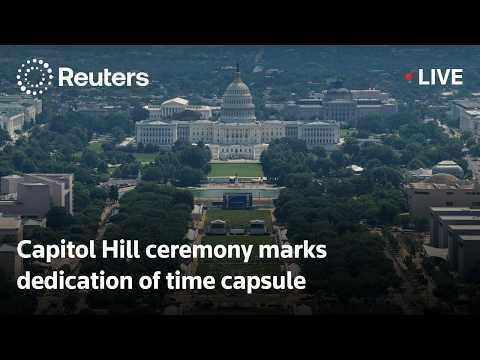
LIVE: Capitol Hill ceremony marks the dedication of time capsule
Congressional leaders gathered to dedicate a time capsule that will be sealed by the 119th Congress and opened in 2276 by the 244th Congress, containing artifacts from every state to commemorate America's 250th anniversary and convey current values to future generations.

What happens when the Federal Reserve goes quiet? | Econ World
New Federal Reserve Chair Kevin Walsh is spearheading a "silent revolution" by eliminating forward guidance and shortening statements to reduce market dependency on Fed signaling, sparking debate over whether less communication enhances or undermines central bank effectiveness during normal economic times.

LIVE: Outgoing British PM Keir Starmer takes questions in parliament
Outgoing Labour Prime Minister Keir Starmer defends his government's record on NHS investment, economic growth, and defense spending while facing sharp criticism from opposition leaders over his resignation and cabinet performance during his final parliamentary questioning session.

LIVE: US World Cup players speak from California base camp
US Men's National Team players highlight their tight-knit chemistry and competitive training culture as drivers of World Cup success, while discussing professional sacrifices, the importance of momentum, and the unique motivation of representing their home country on the West Coast.