LIVE: EU energy ministers arrive in Brussels as prices rise over Iran war
TL;DR
EU energy ministers convened in Brussels to address soaring energy prices driven by Middle East tensions, distinguishing the current situation as a 'price crisis' rather than a supply emergency. While deploying short-term measures like strategic oil releases, ministers rejected structural market overhauls and gas price caps while reaffirming a hard line against any return to Russian energy imports.
📊 Crisis Response & Market Measures 3 insights
Price crisis, not supply crisis
EU Energy Commissioner Kadri Simson emphasized that while prices are dangerously high, there is no security of supply emergency, allowing for targeted short-term measures rather than drastic interventions.
IEA oil reserve release activated
Following a historic International Energy Agency decision, Lithuania announced plans to release strategic oil reserves within days to calm global market volatility, marking the sixth such coordinated release in history.
No gas price caps or market redesign
The EU ruled out gas price caps and changes to the marginal pricing electricity market design, arguing the current system secures supply and that renewables have increased the decoupling of gas and electricity prices since 2022.
⚡ Infrastructure & Grid Integrity 3 insights
Sweden draws 'red line' on congestion revenues
The Swedish minister issued a stark warning against EU proposals to confiscate congestion revenues, stating it would unfairly punish member states with the best-functioning energy systems.
Poland resists centralized grid planning
Poland expressed concerns about the European grids package leading to excessive centralization, advocating for solutions that preserve national TSO stability while increasing market integration.
Critical infrastructure vulnerability
Baltic ministers stressed the need to protect generation assets and rapidly repair damaged infrastructure, citing the over six-month repair time for regional cable outages as unacceptable for market stability.
🛡️ Russian Energy Ban & Geopolitics 3 insights
Zero tolerance for Russian energy revival
Ministers from Lithuania and Sweden vehemently opposed any return to Russian gas or oil, with Sweden stating it would mean 'completely losing our moral compass' by funding the war machinery.
Russia profiting from sanctions evasion
Addressing claims by President Zelenskyy that Russia could earn $10 billion from oil sanctions loopholes, ministers urged the Commission to accelerate the phase-out of Russian oil imports without compromise.
Diversification via Middle Corridor
The EU confirmed ongoing talks with regional partners including Georgia to maintain diversification options for energy imports, though stopped short of naming it the primary transit route.
🔋 Long-term Security & Ukraine 3 insights
Support for Ukraine's energy infrastructure
Ministers discussed preparations for next winter's G7+ Ukraine energy support group, noting extensive EU aid provided to rebuild infrastructure after 'brutal' Russian attacks last winter.
Nuclear and renewables expansion
Poland highlighted its nuclear alliance coordination, emphasizing nuclear power as essential clean baseload while investing heavily in offshore wind to transition away from high-emission sources.
ETS costs hitting competitiveness
Poland flagged that EU carbon market (ETS) costs disproportionately impact coal-dependent transitioning economies, requiring targeted country-specific solutions to maintain industrial competitiveness.
Bottom Line
EU ministers agreed to deploy targeted short-term interventions like strategic oil releases to manage price volatility while holding firm on the structural ban of Russian energy, prioritizing market stability and accelerated domestic renewable investment over emergency market redesign.
More from Reuters
View all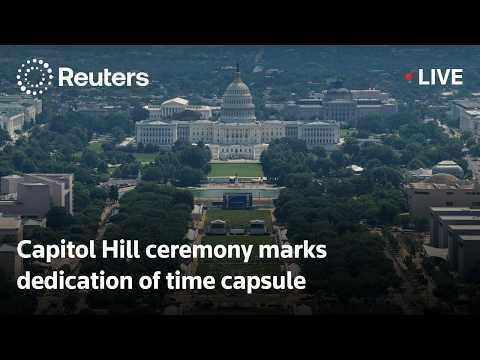
LIVE: Capitol Hill ceremony marks the dedication of time capsule
Congressional leaders gathered to dedicate a time capsule that will be sealed by the 119th Congress and opened in 2276 by the 244th Congress, containing artifacts from every state to commemorate America's 250th anniversary and convey current values to future generations.

What happens when the Federal Reserve goes quiet? | Econ World
New Federal Reserve Chair Kevin Walsh is spearheading a "silent revolution" by eliminating forward guidance and shortening statements to reduce market dependency on Fed signaling, sparking debate over whether less communication enhances or undermines central bank effectiveness during normal economic times.

LIVE: Outgoing British PM Keir Starmer takes questions in parliament
Outgoing Labour Prime Minister Keir Starmer defends his government's record on NHS investment, economic growth, and defense spending while facing sharp criticism from opposition leaders over his resignation and cabinet performance during his final parliamentary questioning session.

LIVE: US World Cup players speak from California base camp
US Men's National Team players highlight their tight-knit chemistry and competitive training culture as drivers of World Cup success, while discussing professional sacrifices, the importance of momentum, and the unique motivation of representing their home country on the West Coast.