LIVE: Canada's Mark Carney visits Australia
TL;DR
Canadian Prime Minister Mark Carney navigates sensitive foreign policy questions during a press conference in Australia, refusing to comment on specifics of alleged Indian interference while emphasizing vigilance, and offering conditional support for US-Israeli strikes on Iran despite legal reservations while calling for immediate de-escalation.
🇮🇳 India Relations and Foreign Interference 3 insights
Refuses to confirm ongoing Indian interference status
Carney avoids direct yes/no answers on whether India remains active in Canadian affairs, citing ongoing criminal proceedings and intelligence confidentiality regarding the death of Mr. Nijjar.
No consequences for officials' comments
He confirms no disciplinary action will be taken against a government official who suggested Indian interference has ceased, though Carney states he would not use those exact words himself.
Major security investments implemented
The government has passed six major crime bills and added thousands of RCMP and border security resources specifically to combat foreign interference and transnational repression.
🇮🇷 Iran Conflict and International Law 3 insights
Conditional support for strikes with legal caveats
Canada supports ending Iran's nuclear program and state terrorism but acknowledges the US-Israeli military action appears 'prima facie inconsistent with international law' and was undertaken without Canadian consultation.
Calls for multilateral de-escalation
Carney emphasizes that ending hostilities requires broader diplomatic efforts involving Middle East allies who have been attacked by Iran, not just bilateral negotiations between the US, Israel, and Iran.
Distinguishes regime goals from war aims
While stating Canada longs for a government consistent with the will of the Iranian people, Carney refuses to insert regime change as a specific war aim into a conflict started by others.
🌍 Canada's Diplomatic Strategy 2 insights
Pragmatic 'world as it is' approach
Carney articulates a foreign policy realism that acknowledges international law violations by adversaries while insisting Canada must deal with current realities rather than idealized scenarios.
Independent positioning from US
He reveals he has not spoken with President Trump about the Iran strikes, stating Canada's position was taken independently based on security assessments rather than alliance coordination or exchange.
Bottom Line
Canada maintains an independent foreign policy stance that balances support for security objectives with adherence to international law, emphasizing domestic vigilance over public confrontation with India and diplomatic de-escalation in the Middle East while avoiding direct military involvement.
More from Reuters
View all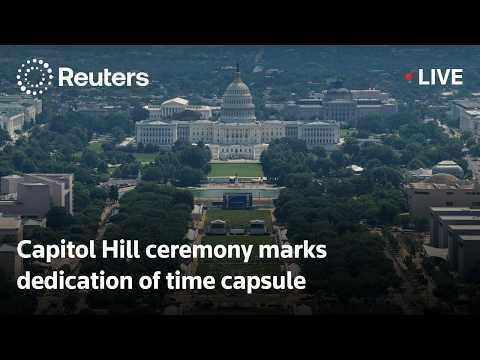
LIVE: Capitol Hill ceremony marks the dedication of time capsule
Congressional leaders gathered to dedicate a time capsule that will be sealed by the 119th Congress and opened in 2276 by the 244th Congress, containing artifacts from every state to commemorate America's 250th anniversary and convey current values to future generations.

What happens when the Federal Reserve goes quiet? | Econ World
New Federal Reserve Chair Kevin Walsh is spearheading a "silent revolution" by eliminating forward guidance and shortening statements to reduce market dependency on Fed signaling, sparking debate over whether less communication enhances or undermines central bank effectiveness during normal economic times.

LIVE: Outgoing British PM Keir Starmer takes questions in parliament
Outgoing Labour Prime Minister Keir Starmer defends his government's record on NHS investment, economic growth, and defense spending while facing sharp criticism from opposition leaders over his resignation and cabinet performance during his final parliamentary questioning session.

LIVE: US World Cup players speak from California base camp
US Men's National Team players highlight their tight-knit chemistry and competitive training culture as drivers of World Cup success, while discussing professional sacrifices, the importance of momentum, and the unique motivation of representing their home country on the West Coast.