If You Want to Make Money From YouTube, Do This (Case Study)
TL;DR
Jeff Sue scaled his YouTube channel from $98 in six months to $835,000 annually by prioritizing teaching over monetization, using a 'creator-first' approach to build audience trust while working full-time at Google before introducing paid products.
📈 Revenue Growth Trajectory 3 insights
From $98 to $835,000 annually
First six months generated only $98 in YouTube ads, but revenue grew to $52,000 in 2021, $449,000 in 2023, and $835,000 in 2025, far exceeding his $150,000 Google base salary.
Unexpected first product success
A free PDF resume template earned $1,000 in donations within a month, revealing audiences reward value voluntarily even when free options exist.
Template business expansion
Now maintains 40+ Gumroad products (90% free), with paid editable versions generating incremental revenue without aggressive marketing.
🎨 Creator-First Philosophy 3 insights
Teaching as primary motivation
Started YouTube to scale his passion for leading Google internal workshops (GTOG) on productivity, choosing video over in-person sessions to avoid repeating the same content.
Risk-averse entrepreneurship
Despite being 'extremely risk-averse' and expecting to retire from Google, he built the channel as a side hustle without dipping into savings or quitting his secure corporate job.
Platform choice rationale
Selected YouTube specifically because its ad model eliminated the need to 'hard pitch' products, unlike TikTok or newsletters that require direct selling.
⚖️ Two Divergent Paths 3 insights
Creator-first approach
Build audience through generous free content first, then develop products based on explicit requests, such as creating $4.99 editable templates after viewers asked for Google Docs versions.
Business-first alternative
Contrast with entrepreneurs like Sahel who build products first through cold outreach (50-100 emails daily) and user interviews, then create content for lead generation.
Personality-driven selection
Jeff acknowledged he lacked the thick skin for cold emails and rejection, making the organic creator path more suitable for corporate professionals uncomfortable with aggressive sales.
🚀 Getting Started 3 insights
Find your 'itch'
Identify what you'd teach weekly if hired by a university, as sustainable content requires intrinsic motivation beyond profit.
Validate through workshops
Jeff tested content through Google's internal teaching program before filming, proving in-person interest predicts video success.
Monetization timing
Wait for audience demand before selling; Jeff's first product emerged organically when viewers requested editable templates after receiving free PDFs.
Bottom Line
Start creating content around topics you'd teach for free, build trust through generous value, and only monetize once your audience explicitly asks for specific products.
More from Ali Abdaal
View all
The Dark Side Of Getting Rich On Youtube
Ali Abdaal and Matt D'Avella discuss how building million-dollar YouTube businesses created crippling anxiety, identity crises, and financial pressure that felt worse than traditional employment, forcing both creators to downsize dramatically and redefine success beyond subscriber counts.
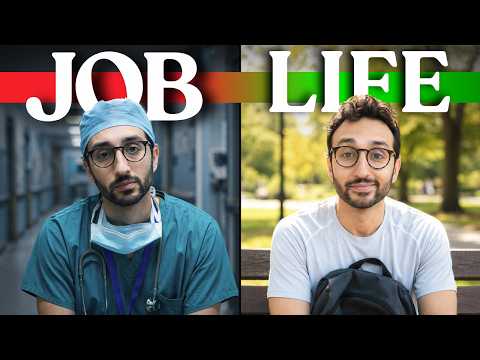
How to Quit Your Job (and Find Work You Actually Love)
Former McKinsey consultant Paul Millard and host Ali Abdaal explore the psychological journey of leaving prestigious but unfulfilling careers without a set plan, outlining how to recognize the societal "prestige game," identify when work drains rather than energizes you, and overcome the shame of deviating from expected career paths.

The Simplest Way to Make $10k/month
William Brown, who scaled his online education business from a $50 Word document to a $16.4 million exit, shares a five-step framework (Offer → Traffic → Sales Process → Conversion → Value) for building a $10k/month business by teaching skills you already possess.

How To Learn AI In A Weekend
Ali Abdaal demonstrates how to rapidly learn AI by using Claude Code to interview you about your business workflows, identifying painful manual tasks to automate, and building practical tools immediately rather than following tutorials—creating a self-reinforcing flywheel where each project expands your understanding of what's possible.