How SpaceX Humiliated Wall Street
TL;DR
SpaceX's record-breaking $75 billion IPO at a $1.78 trillion valuation marks a historic shift from two decades of stock market contraction to massive equity expansion, while simultaneously stripping Wall Street banks of their traditional price-setting authority and reducing them to low-margin service providers.
📉 The End of the Shrinking Market 3 insights
Two decades of equity contraction reversed
Since 2003, the stock market shrank through buybacks, private equity take-private deals, and an IPO drought, creating a supply squeeze that boosted valuations; this trend has now abruptly ended.
AI infrastructure demands force asset-heavy transformation
Big tech firms are converting from cash-generating asset-light websites into capital-intensive infrastructure companies building data centers and power plants, requiring them to issue new shares rather than buy back stock.
Massive new supply incoming
Goldman Sachs forecasts $675 billion in new share issuance this year from IPOs and follow-on offerings, transforming the market into what the narrator calls a giant pawn shop for tech infrastructure bills.
🚀 SpaceX's Shareholder-Unfriendly Structure 3 insights
Largest IPO ever with minimal dilution
SpaceX raised $75-86 billion by selling only 4-5% of the company at $135 per share, a remarkably small slice compared to the typical 20% IPO float, demonstrating Musk's negotiating dominance.
Triple-locked governance structure
Dual-class shares give Musk 10 votes per share versus 1 for public investors, Texas incorporation requires a 3% stake ($50B+) to file proposals, and the charter mandates arbitration while banning class actions and jury trials.
Aggressive $28.5 trillion TAM claim
The prospectus claims a total addressable market equal to one-quarter of global GDP, implying every affluent human on Earth will pay $28,500 annually for space and AI services—three times current global food spending.
🏦 Wall Street's Public Humiliation 4 insights
Banks stripped of price discovery role
Musk unilaterally set the $135 price with no range or negotiation, eliminating the banks' core function of balancing company and investor interests through book-building.
Fees collapsed to utility-level margins
After fighting for the deal, prestigious banks accepted less than 0.75% in fees—down from the traditional 7%—reducing their role to heavily regulated paperwork processors on a fixed-price deal.
Retail raffle replaces institutional courtship
One-fifth of the offering was allocated to retail investors who placed $100 billion in orders for $15 billion in available shares, forcing bankers who typically dine with sovereign wealth funds to manage a massive online lottery.
Goldman wins through unconventional means
Michael Grimes, Morgan Stanley's veteran Musk advisor, was unexpectedly sidelined for Goldman Sachs, prompting CEO David Solomon to publicly deny rumors he secured the deal by sliding into Musk's DMs on X.
Bottom Line
When the world's most valuable companies can dictate their own terms and set their own prices, investment banks become commoditized utilities rather than prestigious gatekeepers, signaling a permanent power shift from Wall Street to Silicon Valley.
More from Patrick Boyle
View all
Brexit, 10 Years On: What It Actually Cost Britain
Ten years after the Brexit referendum, Britain suffers from chronic economic stagnation that fulfilled neither Leave's promises of prosperity nor Remain's warnings of immediate collapse; instead, prolonged policy uncertainty has permanently reduced GDP and living standards, with the costs falling disproportionately on the industrial regions that voted to leave.

The US Government Gave Anthropic 90 Minutes to Shut Down Its AI
The US Commerce Department gave AI startup Anthropic 90 minutes to shut down its Fable 5 and Mythos 5 models for all foreign nationals—forcing a global shutdown—just days after CEO Dario Amodei published an essay advocating for government power to block unsafe AI deployments.

This Is Probably Fine!
Global long-term bond yields are surging to multi-decade highs as markets adjust to persistent inflation and the end of cheap money, but today's massive government debt levels (100%+ of GDP) prevent central banks from aggressively hiking rates to fight inflation—a constraint known as 'fiscal dominance' that fundamentally alters the monetary policy playbook from the Volcker era.
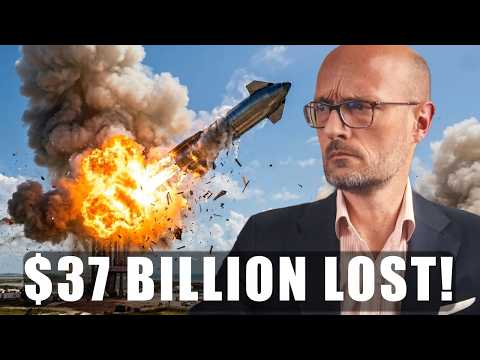
SpaceX IPO: Nice Try Though
SpaceX's IPO prospectus reveals a company valued at $1.75 trillion claiming to be an AI giant despite Starlink being its only profitable division, while obscuring massive losses, unsustainable competitor contracts, and conflicted related-party transactions beneath philosophical rhetoric about human consciousness.