How far should the government go to protect America?
TL;DR
Former Bush and Obama administration officials reflect on the legal and moral challenges of crafting America's counterterrorism response to 9/11, revealing how emergency powers granted in 2001 continue to shape presidential authority and civil liberties debates today.
🏛️ Presidential Powers & The AUMF 3 insights
Immediate legal authority questions
In the hours after 9/11, Gonzales helped determine whether President Bush had legal authority to order the military to shoot down hijacked commercial aircraft heading toward Washington.
The 2001 AUMF as perpetual war power
Passed 98-0 in the Senate just three days after 9/11, the Authorization for Use of Military Force was intended for immediate threats but remains active today, invoked against ISIS and other groups that didn't exist in 2001.
Congressional abdication of war powers
Johnson argues the AUMF should sunset and require Congress to specifically authorize new conflicts, noting that once authority is conferred during crises, it becomes politically nearly impossible to reclaim.
⚖️ Enhanced Interrogation & Legal Boundaries 3 insights
Waterboarding frequency and approval
CIA waterboarded Abu Zubaydah 83 times in 2002 and Khalid Sheikh Mohammed 183 times in 2003, practices the U.S. had previously classified as torture and Geneva Convention violations.
Distinction between policy and abuse
Gonzales maintains Abu Ghraib was unauthorized criminal conduct by individuals, not official policy, though he acknowledges the administration's permissive environment may have served as a 'permission slip' for such behavior.
Interrogation without torture
Johnson recalls a 2009 detainee remarking during a lawful interrogation, 'If that's the worst you're going to do to me, I'm on the wrong side,' illustrating the contrast between authorized techniques and torture.
⚠️ Security vs. Liberty Balance 3 insights
Judicial checks on executive power
The Supreme Court issued four decisions during Bush's first term checking presidential authority, with Justice O'Connor writing that 'a state of war is not a blank check' regarding citizens' rights.
The pendulum of public anxiety
Both officials acknowledge a pendulum effect where Americans accept greater civil liberties intrusions during high-anxiety periods that become difficult to roll back even as threats evolve.
Pre-9/11 security gaps
The discussion highlighted how cockpit doors remained open during flights, passengers carried pocket knives, and the TSA, Department of Homeland Security, and National Counterterrorism Center did not exist before the attacks.
Bottom Line
Emergency powers granted during crises require mandatory sunset provisions and active congressional oversight to prevent temporary security measures from becoming permanent features of unchecked executive authority.
More from How I Built This (NPR)
View all
Starmer’s successor / Reset on UK-US relationship? / Strait latest
Amid historic political instability that has seen seven prime ministers in ten years since Brexit, Keir Starmer resigned due to record-low approval ratings, positioning Manchester Mayor Andy Burnham as his likely successor while the UK navigates strained US relations and deepens its military commitment to Ukraine.

Iran “deal” / Winners and losers / Regional impact
A preliminary three-page US-Iran deal ends four months of war by reopening the Strait of Hormuz and launching 60-day nuclear negotiations, revealing a dramatic reshuffling of regional power that strengthens Iran's regime, isolates Israel, and exposes growing rifts between Washington and its traditional Middle East allies.

Vogue's new leader on why the magazine still matters | Newsmakers
Chloe Malle, the new head of editorial content for American Vogue, discusses her unconventional career path from real estate reporter to fashion authority, arguing that Vogue's curation and authority matter more than ever in an era of digital noise and global uncertainty.
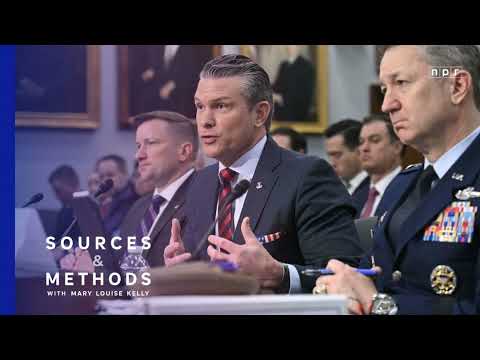
Hegseth blocks promotions / National Guard surge / Downed Apache
Defense Secretary Pete Hegseth is blocking promotions of 24 officers—60% Black or female—without explanation and firing dissenting leaders like General Randy George, creating a climate of fear at the Pentagon, while National Guard troops surge in DC and other cities for crime patrols despite limited effectiveness.