How Ants Inspired This Founder To Build A Robotic Vacuum Cleaner
TL;DR
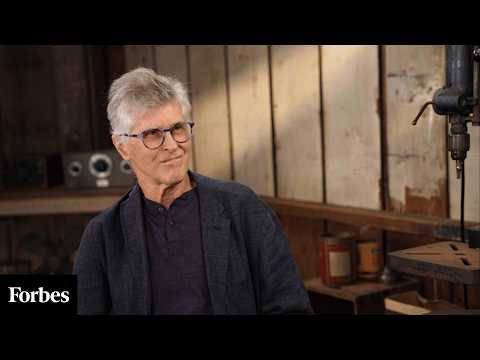
Rodney Brooks traces his journey from building circuits in an Australian garage to inventing the Roomba, explaining how observing ants in Thailand inspired behavior-based robotics that made affordable home robots possible, and details his current work automating warehouses through Robust AI.
🎓 Early Technical Foundations 3 insights
Self-taught programming on 16KB mainframe
Brooks taught himself computer science every Sunday for 12 hours on a university mainframe with only 16 kilobytes of memory, building an AI language and symbolic integration program.
Processing only three images for entire PhD
During his Stanford doctorate in machine vision, computational limitations allowed him to process just three satellite images across his entire thesis research.
Exposure to early robotics at Stanford
Working alongside Hans Moravec, Brooks watched a card-table-sized robot take 15 minutes to move one yard, sparking his interest in physical robotics over pure software.
🐜 From Ants to Roomba 4 insights
Ant observation in Thailand sparked rethink
While watching ants in rural Thailand, Brooks realized insects with fewer than 100,000 neurons navigated complex environments better than robots with massive computers, leading to behavior-based architecture.
Engineering around real-world dirt accumulation
Early Roombas got stuck under beds because they circled on concentrated dirt until batteries died, forcing the team to triple bin sizes and program escape routines.
Pricing strategy based on marital harmony
To undercut Electrolux's €2,000 Trilobyte, Brooks targeted a $200 price point determined by asking mall shoppers the maximum impulse purchase they could make without consulting a spouse.
Redundant safety systems for stair detection
The original Roomba included a triply redundant anti-fall system, with one safety mechanism operating independently of the onboard microprocessor to prevent heavy falls downstairs.
🏭 Modern Warehouse Automation 4 insights
Seven-year development cycle for Robust AI
Brooks emphasizes that hardware requires patience, noting his current company Robust AI took seven years from founding to nationwide deployment of their warehouse carts.
Reducing picker physical strain by 30,000 steps
Robust AI's autonomous carts guide warehouse workers and transport goods autonomously once full, eliminating the 30,000+ daily steps human pickers typically walk in million-square-foot fulfillment centers.
GPU advantage over legacy competitors
Unlike older warehouse automation companies, Robust AI leverages modern GPUs and deep learning models updated every few months, enabling faster iteration and superior performance.
DHL Supply Chain as anchor customer
The company's largest customer is DHL Supply Chain, the world's biggest third-party logistics operator, with carts deployed across the US and Mexico sold as a service model.
Bottom Line
The most important innovations often come from observing biological systems rather than forcing complex computation, and successful hardware ventures require 7+ year commitments to solve real-world deployment challenges.
More from Forbes
View all
The Accidental F1 Racetrack: How A Real Estate Gamble Brought Formula One Back To America
Bobby Epstein, founding partner of Circuit of the Americas, explains how a 2005 residential land purchase accidentally became America's premier Formula 1 venue, generating $7 billion in economic impact by operating as a year-round entertainment 'theater' rather than just a racetrack.

1.8 Billion Views A Month: Inside Dhar Mann’s Massive Creator Studio
Dhar Mann reveals how he built a creator empire generating 1.8 billion monthly views by pivoting from failed entrepreneur to scripted content mogul, bridging traditional Hollywood production values with the agility of the creator economy.
The Stanford Professor Taking Down A $3 Trillion Industry
Stanford professor Patrick Brown traces his journey from pioneering HIV research and inventing DNA microarray technology to founding Impossible Foods, arguing that biotechnology must dismantle the $3 trillion animal agriculture industry to prevent ecological collapse.

How This Pioneer Of Cancer Diagnosis Built A Multibillion Dollar Medical Empire
Medical technology pioneer Stan recounts building two multi-billion dollar diagnostic empires—Cytyc (sold for $6.2B) and Exact Sciences (sold for $21B)—by applying engineering solutions to clinically important but scientifically overlooked cancer detection problems