EU leaders meet in Brussels to discuss energy prices
TL;DR
EU leaders convened in Brussels to address soaring energy prices exacerbated by Middle East tensions, resolve Hungary's blockade of a €90 billion aid package for Ukraine over oil transit disputes, and advance institutional reforms to boost competitiveness and strategic autonomy.
🛡️ Ukraine Aid & Diplomatic Strategy 3 insights
Hungary blocks €90bn loan over oil transit dispute
Prime Minister Viktor Orbán refuses to support any pro-Ukrainian decisions until oil deliveries resume through the Druzhba pipeline, stating the issue is existential for Hungary's households and companies.
Belgium demands EU seat at peace negotiations
Prime Minister Alexander De Croo argues it is unacceptable for Europe to finance Ukraine's war effort while being excluded from diplomatic negotiations with Russia.
Leaders push 20th sanctions package against Russia
De Croo advocates for additional sanctions and maintaining pressure on Russia while continuing financial support to prepare Ukraine for winter.
⚡ Energy Security & Price Crisis 3 insights
Middle East conflict spikes energy costs
Leaders identify rising energy prices as the top agenda priority, with Finnish Prime Minister Petteri Orpo noting Russia benefits most from regional chaos and resulting price volatility.
Divisions emerge over ETS system reform
While Dutch Prime Minister Mark Rutte and Orpo defend the Emissions Trading System as crucial for green transition and independence, De Croo proposes reforms to address immediate consumer and industrial price pressures.
Homegrown production key to strategic autonomy
Commission President Ursula von der Leyen emphasizes that synchronizing energy systems and accelerating domestic clean energy production is the only path to reliable supply and security.
🌍 Competitiveness & Geopolitical Posture 3 insights
2026 designated as European Year of Competitiveness
Von der Leyen announces concrete measures with a 2027 deadline to complete the Capital Markets Union and launch the 'EU Inc.' corporate simplification regime to boost innovation.
EU rejects military role in Iran conflict
Leaders including De Croo and Rutte rule out European military involvement in the Iran war, advocating instead for de-escalation and sanctions against the Iranian regime.
Support for Iranian democratic forces
Rutte argues that bombing Iran will not achieve regime change and advocates for increased EU sanctions against the regime coupled with support for internal democratic opposition.
Bottom Line
The EU must resolve the Hungary-Ukraine oil transit impasse to release critical aid funding while balancing immediate energy price relief with long-term green transition policies and strategic autonomy initiatives.
More from Reuters
View all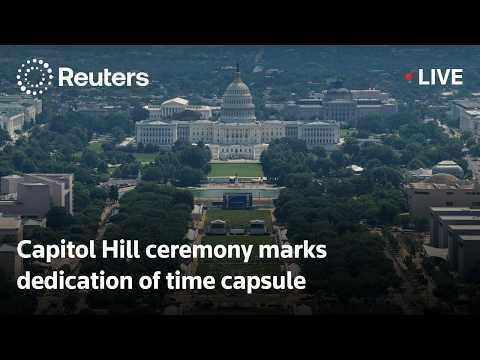
LIVE: Capitol Hill ceremony marks the dedication of time capsule
Congressional leaders gathered to dedicate a time capsule that will be sealed by the 119th Congress and opened in 2276 by the 244th Congress, containing artifacts from every state to commemorate America's 250th anniversary and convey current values to future generations.

What happens when the Federal Reserve goes quiet? | Econ World
New Federal Reserve Chair Kevin Walsh is spearheading a "silent revolution" by eliminating forward guidance and shortening statements to reduce market dependency on Fed signaling, sparking debate over whether less communication enhances or undermines central bank effectiveness during normal economic times.

LIVE: Outgoing British PM Keir Starmer takes questions in parliament
Outgoing Labour Prime Minister Keir Starmer defends his government's record on NHS investment, economic growth, and defense spending while facing sharp criticism from opposition leaders over his resignation and cabinet performance during his final parliamentary questioning session.

LIVE: US World Cup players speak from California base camp
US Men's National Team players highlight their tight-knit chemistry and competitive training culture as drivers of World Cup success, while discussing professional sacrifices, the importance of momentum, and the unique motivation of representing their home country on the West Coast.